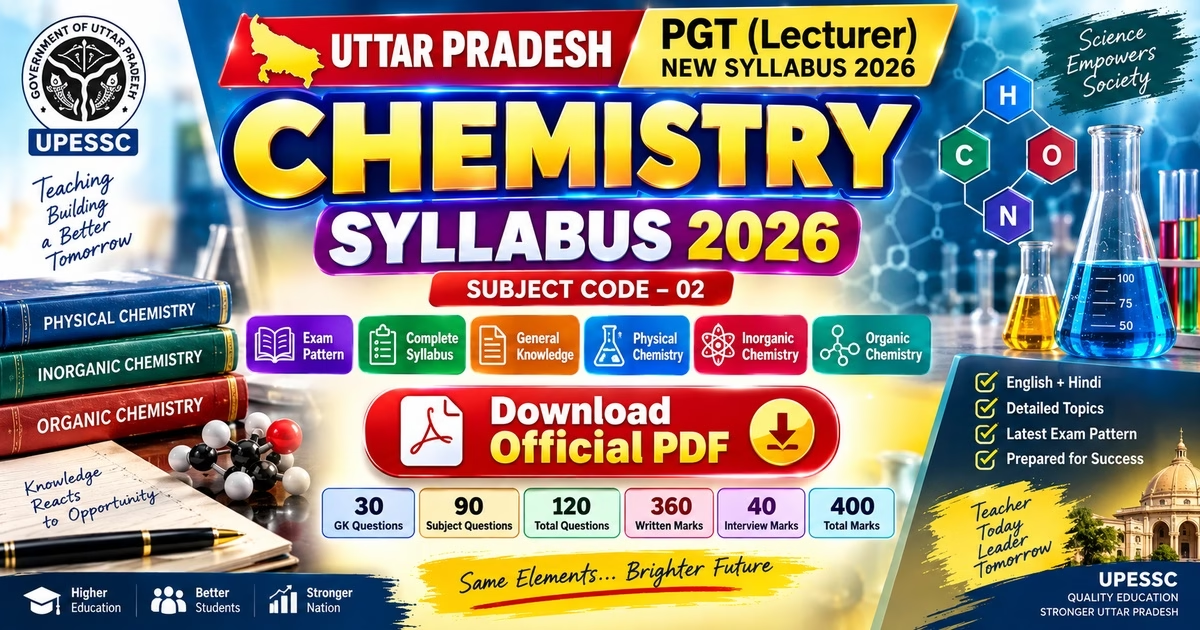
UP PGT Chemistry Syllabus 2026
Complete Chemistry Syllabus • Subject Code 02 • General Knowledge • Exam Pattern • Physical Chemistry • Inorganic Chemistry • Organic Chemistry • Official PDF
📘 UP PGT Chemistry Syllabus 2026 – Complete Guide
UP PGT Chemistry Syllabus 2026 की तैयारी करने वाले अभ्यर्थियों के लिए यह page Chemistry के उपलब्ध syllabus को एक व्यवस्थित और reader-friendly format में प्रस्तुत करता है।
उपलब्ध syllabus document में Lecturer (PGT) – CHEMISTRY (Subject Code–02) के अंतर्गत Physical Chemistry, Inorganic Chemistry और Organic Chemistry के विस्तृत topics दिए गए हैं। इसी document में TGT एवं PGT के लिए General Knowledge का common section भी दिया गया है।
📄 UP PGT Chemistry & General Knowledge Official Syllabus PDF
UP PGT Chemistry तथा common General Knowledge syllabus के उपलब्ध official PDF को नीचे दिए गए button से सीधे open/download करें।
Document: PGT Chemistry and GK Syllabus
Subject: Lecturer (PGT) – Chemistry
Subject Code: 02
📥 VIEW / DOWNLOAD OFFICIAL CHEMISTRY SYLLABUS PDF📊 UP PGT Chemistry 2026 – Quick Overview
| Particular | Details |
|---|---|
| Examination | UP PGT / Lecturer |
| Subject | Chemistry |
| Subject Code | 02 |
| Concerned Subject | 90 Questions – 270 Marks |
| General Knowledge | 30 Questions – 90 Marks |
| Written Examination | 120 Questions – 360 Marks |
| PGT Interview | 40 Marks |
| Total Selection Framework | 400 Marks |
The current PGT series on Objective English presents the revised written framework as 30 General Knowledge questions + 90 concerned-subject questions = 120 written questions and 360 written marks, with a 40-mark interview framework for PGT. 4
📝 UP PGT Chemistry Exam Pattern 2026
| Section | Questions | Marks |
|---|---|---|
| General Knowledge / General Studies | 30 | 90 |
| Concerned Subject – Chemistry | 90 | 270 |
| Written Examination | 120 | 360 |
| Interview | — | 40 |
| Total Selection Framework | — | 400 |
🧠 General Knowledge Syllabus – 30 Questions
उपलब्ध Chemistry syllabus PDF के शुरुआती pages में TGT एवं PGT के लिए General Knowledge का common section दिया गया है और इसमें 30 Questions निर्धारित हैं।
Unit 1 – Current Affairs
- Current Affairs
- State, National and International importance की current events
Unit 2 – Indian History, Polity, Economy & Geography
- Indian History
- Indian Polity
- Indian Economy
- Indian Geography
Unit 3 – General Science & ICT
- General Science
- Information and Communication Technology (ICT)
🧪 UP PGT Chemistry Syllabus 2026 – Main Sections
🔵 Physical Chemistry
Gases, Liquid State, Solid State, Thermodynamics, Dilute Solutions, Surface Phenomenon, Chemical Kinetics, Chemical Equilibrium और Electrochemistry.
🟢 Inorganic Chemistry
Atomic Structure, Quantum Numbers, Orbitals, Periodic Properties, Chemical Bonding, s-block, p-block, d-block, f-block, Organometallic और Bioinorganic Chemistry.
🟠 Organic Chemistry
Basic Principles, Organic Reactions, Isomerism, Hydrocarbons, Benzene Derivatives, Functional Groups, Biomolecules, Polymers, Everyday Chemistry और Named Reactions.
🔬 Section A – Physical Chemistry
1. Gases
Gases से संबंधित निर्धारित syllabus topics की तैयारी करें और संबंधित fundamental concepts को syllabus document के अनुसार पढ़ें।
2. Liquid State
Liquid State से संबंधित निर्धारित topics.
3. Solid State
Solid State से संबंधित निर्धारित topics.
4. Thermodynamics
Thermodynamics syllabus का महत्वपूर्ण हिस्सा है। उपलब्ध PDF में इसके अंतर्गत निर्धारित topics को शामिल किया गया है।
5. Dilute Solutions
Dilute Solutions से संबंधित निर्धारित concepts तैयार करें।
6. Surface Phenomenon
Surface Phenomenon के निर्धारित topics का अध्ययन करें।
7. Chemical Kinetics
Chemical Kinetics से संबंधित syllabus topics.
8. Chemical Equilibrium
Chemical Equilibrium के निर्धारित topics को syllabus के अनुसार तैयार करें।
9. Electrochemistry
Electrochemistry Physical Chemistry का निर्धारित अंतिम major topic है।
⚛️ Section B – Inorganic Chemistry
1. Atomic Structure
- Atomic structure
- Heisenberg Uncertainty Principle
- Schrödinger Equation
- Quantum Numbers
- Orbitals
- Aufbau Principle
- Pauli Exclusion Principle
- Hund’s Rule
2. Periodic Properties
Periodic properties से संबंधित निर्धारित syllabus topics.
3. Chemical Bonding
Chemical Bonding से संबंधित निर्धारित topics का अध्ययन करें।
4. s-Block Elements
s-block elements के निर्धारित topics.
5. p-Block Elements
p-block elements के निर्धारित topics.
6. d-Block Elements
d-block elements के निर्धारित topics.
7. Organometallic Chemistry
Organometallic Chemistry syllabus का निर्धारित हिस्सा है।
8. Bioinorganic Chemistry
Bioinorganic Chemistry के निर्धारित syllabus topics.
9. f-Block Elements
f-block elements के निर्धारित topics.
🧬 Section C – Organic Chemistry
1. Basic Principles and Techniques
Organic Chemistry के basic principles और techniques.
2. Electronic Displacements
Electronic displacement से संबंधित निर्धारित concepts.
3. Organic Reaction Mechanisms
- SN1
- SN2
- E1
- E2
- E1cB
4. Addition and Substitution Reactions
- Electrophilic addition of alkenes
- Nucleophilic addition of carbonyl compounds
- Acyl substitution
- Electrophilic aromatic substitution
5. Estimation of Elements
Organic compounds में elements की estimation से संबंधित निर्धारित topics.
6. Isomerism
Isomerism से संबंधित निर्धारित syllabus topics.
7. Hydrocarbons
Hydrocarbons तथा संबंधित निर्धारित topics.
8. Aromatic Hydrocarbons
Aromatic Hydrocarbons के निर्धारित topics.
9. Benzene Derivatives
Benzene derivatives के निर्धारित syllabus topics.
10. Haloalkanes
Haloalkanes से संबंधित निर्धारित topics.
11. Alcohols
Alcohols के निर्धारित syllabus topics.
12. Aldehydes and Ketones
Aldehydes and Ketones से संबंधित निर्धारित topics.
13. Ethers
Ethers से संबंधित निर्धारित topics.
14. Carboxylic Acids and Derivatives
Carboxylic acids और उनके derivatives.
15. Organic Compounds Containing Nitrogen
- Amines
- Nitro Compounds
- Cyanides / Isocyanides
- Benzene Diazonium Chloride
16. Biomolecules
Biomolecules से संबंधित निर्धारित topics.
17. Steroids
Steroids syllabus का निर्धारित topic है।
18. Vitamins
Vitamins से संबंधित निर्धारित topics.
19. Nucleic Acids and DNA Fingerprinting
Nucleic Acids तथा DNA Fingerprinting syllabus में शामिल हैं।
20. Polymers
Polymers से संबंधित निर्धारित topics.
21. Chemistry in Everyday Life
Chemistry in Everyday Life syllabus का निर्धारित हिस्सा है।
⚗️ Named Reactions Included in the Syllabus
उपलब्ध Chemistry syllabus में निम्नलिखित named reactions / reactions mechanisms दिए गए हैं:
| No. | Named Reaction |
|---|---|
| 1 | Williamson Ether Synthesis |
| 2 | Addition of Boranes with Alkenes |
| 3 | Wittig Reaction |
| 4 | Perkin Reaction |
| 5 | Aldol Reaction / Condensation |
| 6 | Cannizzaro Reaction |
| 7 | Michael Reaction |
| 8 | Reimer–Tiemann Reaction |
| 9 | Benzoin Condensation |
| 10 | Diazonium Coupling |
| 11 | Reformatsky Reaction |
🇮🇳 UP PGT रसायन विज्ञान सिलेबस 2026 – हिन्दी में
विषय कोड – 02
भौतिक रसायन
- गैसें
- द्रव अवस्था
- ठोस अवस्था
- ऊष्मागतिकी
- तनु विलयन
- पृष्ठ परिघटना
- रासायनिक बलगतिकी
- रासायनिक साम्य
- वैद्युत रसायन
अकार्बनिक रसायन
- परमाणु संरचना
- हाइजेनबर्ग अनिश्चितता सिद्धान्त
- श्रॉडिंगर समीकरण
- क्वांटम संख्याएँ
- ऑर्बिटल्स
- आफबाउ सिद्धान्त
- पॉली अपवर्जन सिद्धान्त
- हुंड का नियम
- आवर्त गुण
- रासायनिक बंधन
- s-ब्लॉक तत्व
- p-ब्लॉक तत्व
- d-ब्लॉक तत्व
- ऑर्गेनोमेटैलिक रसायन
- जैव-अकार्बनिक रसायन
- f-ब्लॉक तत्व
कार्बनिक रसायन
- मूल सिद्धान्त एवं तकनीक
- इलेक्ट्रॉनिक विस्थापन
- SN1, SN2, E1, E2, E1cB
- एल्कीनों का इलेक्ट्रोफिलिक योग
- कार्बोनिल यौगिकों का न्यूक्लियोफिलिक योग
- एसिल प्रतिस्थापन
- इलेक्ट्रोफिलिक एरोमैटिक प्रतिस्थापन
- तत्वों का आकलन
- समावयवता
- हाइड्रोकार्बन
- एरोमैटिक हाइड्रोकार्बन
- बेंजीन के व्युत्पन्न
- हैलोऐल्केन
- ऐल्कोहॉल
- ऐल्डिहाइड एवं कीटोन
- ईथर
- कार्बोक्सिलिक अम्ल एवं उनके व्युत्पन्न
- नाइट्रोजन युक्त कार्बनिक यौगिक
- बायोमोलेक्यूल्स
- स्टेरॉयड
- विटामिन
- न्यूक्लिक अम्ल एवं DNA Fingerprinting
- पॉलिमर
- दैनिक जीवन में रसायन
निर्धारित Named Reactions
- Williamson Ether Synthesis
- Addition of Boranes with Alkenes
- Wittig Reaction
- Perkin Reaction
- Aldol Reaction
- Cannizzaro Reaction
- Michael Reaction
- Reimer–Tiemann Reaction
- Benzoin Condensation
- Diazonium Coupling
- Reformatsky Reaction
🎯 UP PGT Chemistry Preparation Strategy 2026
1. पहले Official Syllabus को पूरा पढ़ें
Chemistry की preparation शुरू करने से पहले Physical, Inorganic और Organic Chemistry के सभी निर्धारित topics को एक checklist में divide करें।
2. Physical Chemistry को concept + practice के साथ तैयार करें
Gases, Liquid State, Solid State, Thermodynamics, Dilute Solutions, Surface Phenomenon, Chemical Kinetics, Chemical Equilibrium और Electrochemistry को syllabus के क्रम में पढ़ें।
3. Inorganic Chemistry में periodic और bonding concepts मजबूत करें
Atomic Structure, Quantum Numbers, Orbitals, Periodic Properties, Chemical Bonding तथा blocks of elements को व्यवस्थित तरीके से revise करें।
4. Organic Chemistry को reaction mechanism के साथ पढ़ें
SN1, SN2, E1, E2, E1cB तथा addition, substitution और aromatic reactions के साथ syllabus में दिए गए named reactions को भी नियमित रूप से revise करें।
5. Biomolecules, Polymers और Everyday Chemistry को न छोड़ें
Biomolecules, Steroids, Vitamins, Nucleic Acids, DNA Fingerprinting, Polymers और Chemistry in Everyday Life को अलग-अलग revision blocks में रखें।
6. GK के 30 Questions के लिए अलग समय रखें
Current Affairs, Indian History, Indian Polity, Indian Economy, Geography, General Science और ICT से संबंधित common GK preparation को Chemistry preparation के साथ जोड़ें।
7. Previous Papers और Mock Tests का अभ्यास करें
Syllabus पूरा करने के बाद topic-wise MCQs, previous papers और mock tests से practice करें तथा गलत questions की अलग revision list बनाएं।
8. Negative Marking को ध्यान में रखकर accuracy बढ़ाएँ
Revised PGT framework में wrong/multiple answer पर negative marking बताई गई है। इसलिए mock tests में केवल attempts की संख्या नहीं बल्कि accuracy और question selection पर भी ध्यान दें।
📚 UP PGT New Syllabus 2026 – Other Subject Posts
Chemistry के साथ Objective English पर उपलब्ध अन्य PGT syllabus resources भी देखें। इससे candidates को अलग-अलग subjects के official syllabus pages एक ही स्थान से मिल जाते हैं।
📚 UP TGT New Syllabus 2026 – All Available Subject Posts
UP TGT preparation के लिए हमारी website पर उपलब्ध subject-wise new syllabus posts नीचे दिए गए हैं। प्रत्येक card संबंधित detailed syllabus page पर ले जाता है।
🧭 UP TGT & PGT New Syllabus 2026 – Master Guide
TGT और PGT के revised syllabus, examination framework, subject questions, General Studies/GK और selection-related information को एक जगह समझने के लिए हमारा Master Guide देखें।
📚 UP TGT PGT NEW SYLLABUS 2026 – MASTER GUIDE New Exam Pattern • 90 Subject + 30 General Studies Questions • Negative Marking • Selection Process📑 UP PGT Recruitment & Previous Solved Papers
📖 English Preparation Resources
Teacher recruitment examinations की तैयारी में English-related practice resources भी उपयोगी हो सकते हैं। Objective English पर English Grammar, General English, Literature, Authors, Shakespeare, Literary Devices और MCQ resources उपलब्ध हैं।
🌐 Our Other Educational & Useful Websites
Objective English के अलावा हमारी अन्य websites भी अलग-अलग educational, career, calculator, resume और student-resource needs के लिए बनाई गई हैं। नीचे प्रत्येक website का short introduction दिया गया है।
🎓 My Career Guide
Students को अलग-अलग careers को समझने, eligibility, qualifications, subjects, entrance examinations और career roadmap जैसी जानकारी व्यवस्थित रूप से समझाने के लिए हमारा career guidance platform।
Visit My Career Guide →🧮 Calculators
Students और सामान्य users के लिए उपयोगी online calculators का dedicated platform, जहाँ विभिन्न practical calculations को आसान तरीके से किया जा सकता है।
Visit Calculators →📄 Resumes Build
Students, job seekers और professionals के लिए resume और career-related resources उपलब्ध कराने वाला platform, जिससे professional documents तैयार करने में सहायता मिल सके।
Visit Resumes Build →👶 Baby Name Labs
Parents और families के लिए baby names से संबंधित information और name-selection resources उपलब्ध कराने वाला dedicated website।
Visit Baby Name Labs →📚 10th Class – UP Board Resources
Class 10 students के लिए UP Board से संबंधित educational resources, English solved papers और examination preparation material का dedicated platform। इस content को मुख्य Objective English website से अलग subdomain पर रखा गया है।
Visit 10th Class Website →🔗 Important Official & Study Resources
❓ UP PGT Chemistry Syllabus 2026 – FAQs
उपलब्ध official syllabus document में Lecturer (PGT) – Chemistry के लिए Subject Code–02 दिया गया है।
Revised PGT examination framework के अनुसार concerned subject से 90 questions हैं।
TGT एवं PGT के common General Knowledge section में 30 questions हैं।
Revised framework के अनुसार written examination 360 marks का है।
Physical Chemistry, Inorganic Chemistry और Organic Chemistry इसके मुख्य subject areas हैं।
हाँ। उपलब्ध syllabus में Williamson, Borane addition, Wittig, Perkin, Aldol, Cannizzaro, Michael, Reimer–Tiemann, Benzoin, Diazonium Coupling और Reformatsky reactions दिए गए हैं।
हाँ। उपलब्ध document में TGT एवं PGT के लिए common General Knowledge section दिया गया है।
इस page के Official Chemistry PDF button से उपलब्ध PDF को सीधे open/download किया जा सकता है।
Recruitment, examination, application और अन्य अंतिम नियमों के लिए UPESSC की official website और latest official notifications को प्राथमिक source मानें।
✅ UP PGT Chemistry Syllabus 2026 – Final Checklist
🏆 UP PGT Chemistry Preparation Formula
📌 Official Source Note
इस article में Chemistry subject syllabus और common General Knowledge section को उपलब्ध PGT Chemistry and GK Syllabus PDF के आधार पर व्यवस्थित किया गया है।
Available document में Lecturer (PGT) – Chemistry, Subject Code–02 तथा Physical Chemistry, Inorganic Chemistry और Organic Chemistry के निर्धारित topics दिए गए हैं।
Examination pattern, marking, recruitment, application और selection से संबंधित किसी भी अंतिम/नवीनतम बदलाव के लिए UPESSC द्वारा जारी latest official notification/instructions को प्राथमिक source माना जाना चाहिए।
Official Commission: Uttar Pradesh Education Service Selection Commission (UPESSC)
📢 UP PGT Chemistry 2026 Preparation
Official syllabus को पहले समझें, Chemistry के तीनों major areas को systematically पूरा करें, common GK की नियमित तैयारी करें और फिर MCQs, previous papers तथा mock tests से practice करें।