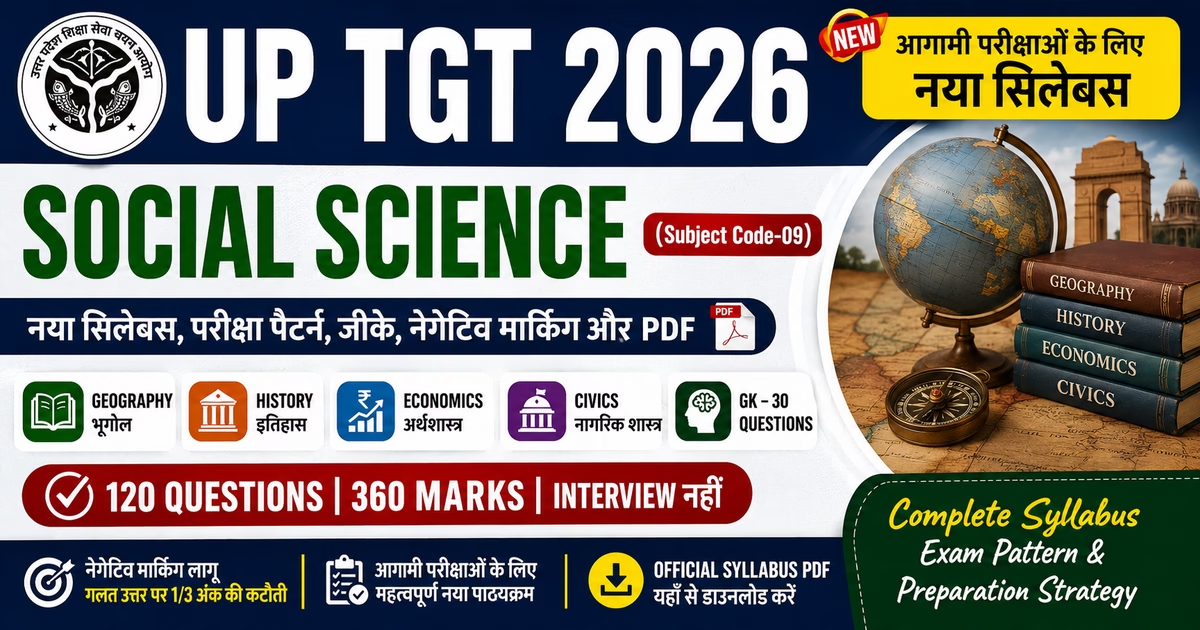
UP TGT Social Science New Syllabus 2026: Subject Code 09, GK, PDF & Exam Pattern
UP TGT Social Science New Syllabus 2026 की पूरी जानकारी एक ही स्थान पर। इस article में Official Syllabus के आधार पर Geography, History, Economics और Civics के विस्तृत topics को आसान और व्यवस्थित तरीके से प्रस्तुत किया गया है।
साथ ही General Knowledge के 30 Questions, UP TGT Exam Pattern, Negative Marking, Subject Code-09, Official Syllabus PDF Download और Preparation Strategy की जानकारी भी दी गई है।
उत्तर प्रदेश शिक्षा सेवा चयन आयोग द्वारा 2026 में जारी किया गया यह नया पाठ्यक्रम अब आगामी UP TGT परीक्षाओं के लिए लागू नवीन syllabus के रूप में महत्वपूर्ण है।
2026 की परीक्षा प्रक्रिया संपन्न होने के बाद अब आगामी परीक्षाओं की तैयारी करने वाले अभ्यर्थियों को इसी नवीन पाठ्यक्रम के अनुसार अपनी तैयारी की दिशा निर्धारित करनी चाहिए।
भविष्य में आयोग द्वारा syllabus, examination pattern अथवा selection process से संबंधित कोई नया official notification या संशोधन जारी किया जाता है, तो वही नवीनतम जानकारी अंतिम रूप से मान्य होगी।
यदि आप आगामी UP TGT Social Science Exam की तैयारी कर रहे हैं और UP TGT Social Science Syllabus 2026, UP TGT SST Syllabus, UP TGT Social Science PDF, UP TGT Geography Syllabus, UP TGT History Syllabus, UP TGT Economics Syllabus और UP TGT Civics Syllabus जैसी जानकारी खोज रहे हैं, तो यह article आपके लिए उपयोगी reference है।
📌 UP TGT Social Science New Syllabus 2026 – Quick Overview
| Particular | Details |
|---|---|
| Post | Trained Graduate Teacher (TGT) |
| Subject | Social Science |
| Subject Code | 09 |
| Major Sections | Geography, History, Economics and Civics |
| General Knowledge | 30 Questions |
| Subject Questions | 90 Questions |
| Total Written Questions | 120 Questions |
| Total Written Marks | 360 Marks |
| Interview | नहीं |
UP TGT written examination framework में 90 Questions concerned subject और 30 General Knowledge Questions को शामिल किया गया है।
इस प्रकार कुल 120 Questions और 360 Written Marks का written examination framework है।
UP TGT में Interview नहीं है।
⚠️ Negative Marking – आगामी परीक्षाओं के अभ्यर्थी ध्यान दें
नए TGT/PGT examination framework से संबंधित उपलब्ध जानकारी के अनुसार गलत उत्तर पर निर्धारित प्रश्न के अंकों का 1/3 काटे जाने का प्रावधान बताया गया है।
यदि प्रश्न 3 अंक का है, तो गलत उत्तर पर 1 अंक की कटौती होगी।
इसलिए आगामी परीक्षाओं की तैयारी में केवल speed नहीं बल्कि accuracy और conceptual clarity पर भी विशेष ध्यान देना आवश्यक है।
नोट: उपलब्ध Social Science syllabus PDF में negative marking का विवरण अलग से नहीं दिया गया है। इसलिए marking scheme से संबंधित अंतिम नियम के लिए आगामी official notification को प्राथमिकता दें।
📥 UP TGT Social Science & General Knowledge Official Syllabus PDF
पूरे official syllabus को original document के रूप में पढ़ने और download करने के लिए नीचे दिए गए button पर click करें।
📄 DOWNLOAD OFFICIAL SYLLABUS PDF📚 General Knowledge Syllabus – 30 Questions
Official PDF के pages 1 और 2 में TGT एवं PGT के लिए common General Knowledge syllabus दिया गया है। इसमें कुल 30 Questions निर्धारित हैं।
🔵 Unit 1 – Current Affairs
- राज्य, राष्ट्रीय एवं अन्तर्राष्ट्रीय महत्व की सामयिक घटनाएँ
- चर्चित व्यक्तित्व
- खेल
🟢 Unit 2 – Indian History, Indian Polity, Indian Economy & Indian Geography
- भारतीय इतिहास एवं भारतीय स्वतंत्रता आन्दोलन
- भारतीय संविधान एवं राज व्यवस्था
- शैक्षिक व्यवस्था से संबंधित विधिक एवं संवैधानिक विकास
- भारतीय अर्थव्यवस्था
- भारत का सामान्य भूगोल एवं जनसंख्या
🟠 Unit 3 – General Science, Information & Communication Technology
- सामान्य विज्ञान, समसामयिक संदर्भ में प्रौद्योगिकी एवं पर्यावरण
- मानव स्वास्थ्य एवं स्वच्छता – विटामिन, खनिज, रोग, अल्पताजन्य रोग, हार्मोन्स एवं एन्जाइम
- कम्प्यूटर और इंटरनेट शब्दावली
- ICT के अनुप्रयोग
- शैक्षिक प्रौद्योगिकी में विकास
🌍 UP TGT Social Science Geography Syllabus 2026
Official syllabus में Geography को Physical Geography, Human Geography, Economic Geography और Geography of India जैसे प्रमुख sections में व्यवस्थित किया गया है।
1. Physical Geography
- Solar System की उत्पत्ति, पृथ्वी का आकार एवं गतियाँ
- Solar System में पृथ्वी की स्थिति तथा पृथ्वी की गतियों के प्रभाव
- Latitude और Longitude
- International Date Line
- Time Zones
- International Date Line की alignment और significance
- Lithosphere
- Rocks – origin and types
- Volcanic activity – volcanoes के types और उनका global distribution
- Earthquakes – continents और oceans में distribution
- Mountains और उनके types
- Plateaus, Plains और Valleys
- Mountains, Plateaus और Plains का global distribution
- Weathering, Erosion और Deposition
- Glaciers, Winds और Rivers
- Ocean और drainage का process
- Hydrosphere – relief features of ocean bottom
- Ocean Temperature और Salinity
- Ocean Circulation
- Tides
- Atmosphere की structure
- Temperature को प्रभावित करने वाले factors
- Horizontal और Vertical distribution of temperature
- Air Pressure belts
- Permanent और local winds
- Precipitation processes – Rain, Frost आदि
- Convectional, Orographic और Cyclonic rainfall
- Cyclones और Anticyclones
- Climatic regions of world
- Biosphere – structure, types of vegetation, flora and fauna
2. Human Geography
- Man-Environment interrelationships और theoretical analysis
- Davis, Humboldt, La Blache, Brunhes और Griffith Taylor के perspectives
- Global population growth और distribution
- Human races
- Characteristics and distribution of human races
- Natural regions of world
- Human settlements
- World के major natural regions में rural settlements और environment के साथ उनका relationship
- World’s major cities – location और significance
3. Economic Geography
- World की geographical analysis of major crops
- Rice, Wheat, Cotton, Sugarcane, Jute, Tea, Coffee और Rubber
- Dairy और poultry farming
- Fishing
- Major energy resources
- Coal, Petroleum, Iron, Manganese, Bauxite और Copper
- Major industries की location को प्रभावित करने वाले factors
- Iron and steel industry
- Cotton and synthetic textiles
- Paper industry
- Oil refining industries
- World’s major industrial regions
- World’s major trade routes and ports
4. Geography of India
- Location, extent, international boundaries और associated geo-political issues
- Indian Ocean – economic and strategic significance
- India’s Physiography
- Drainage system
- Origin and characteristics of Monsoon
- Climatic regions और their features
- Soils और natural vegetation
- Deforestation तथा floods और soil erosion की समस्याएँ
- Agriculture और food grain production
- Green Revolution
- White Revolution
- Blue Revolution
- Major crops – Rice, Wheat, Sugarcane, Pulses, Oilseeds, Tea और Shri Anna (Millets)
- Mineral resources और उनका geographical distribution
- Iron ore, Manganese, Bauxite, Coal और अन्य minerals
- Alternative sources of energy
- Multipurpose river valley projects और associated environmental issues
- Iron and steel, textile, sugar, paper, cement और aluminium industries
- Population growth and distribution
- Population-related problems
- Major modes of transport in India
- Transport routes and ports
- Foreign trade
- Major cities
🏛️ UP TGT Social Science History Syllabus 2026
1. Ancient Historical Culture
- Pre-Pottery Age
- Pottery Age
- Pre-Pottery और New Pottery Age की प्रमुख विशेषताएँ
- Vedic Period – मुख्य विशेषताएँ
2. Religious Movements
- Jainism
- Buddhism
- Bhagavatism
- Shaivism
- Bhakti की विशेषताएँ
3. Mauryan Empire
- Chandragupta Maurya
- Bindusara
- Ashoka
- Mauryan Administration
- Art and Society
4. Post-Mauryan Period
- Shunga Dynasty
- Satavahana Dynasty
- Kushana Dynasty
- Kanishka
- Gandhara Art
- Mathura Art
5. Gupta Empire
- Chandragupta I
- Samudragupta
- Chandragupta II
- Skandagupta
- Gupta Administration
- Gupta Culture
- Gupta Literature
- Gupta Art
6. Post-Gupta Period
- Harsha
- Chalukyas
- Pallavas
- Cholas
- Southern Indian dynasties and their important contributions
7. Arab and Turkish Invasions
- Arab Invasion
- Muhammad Bin Qasim
- Turkish Invasions
- Mahmud of Ghazni
- Muhammad Ghori
- Delhi Sultanate
- Administrative and political developments of the Sultanate period
- Muhammad Bin Tughlaq
- Firoz Shah Tughlaq
- Invasion of Timur
- Bahmani Kingdom
8. Mughal Dynasty
- Life and achievements of Babur
- Humayun
- Akbar
- Jahangir
- Shahjahan
- Aurangzeb
- Mughal Administration
- Mughal Culture
- Architecture
9. Modern India – 1858 to 1950
- Causes, Nature and Impact of the War of Independence of 1857
- Indian Renaissance
- Socio-religious movements in the 19th century
- Nature and Impact of Revolutionary Movements
- Contribution of Mahatma Gandhi in the National Movement
- Achievement of Independence
- Indian Partition and its aftermath
- Main features of Indian Republic
💰 UP TGT Social Science Economics Syllabus 2026
1. Economic Theory
- Economics – Definition and Nature
- Static and Dynamic Analysis
- Micro and Macro Analysis
- Law of Demand and Measurement of Elasticity of Demand
- Utility Analysis
- Consumer’s Equilibrium through Indifference Curve
- Price Effect, Income Effect और Substitution Effect
- Revealed Preference
- Law of Variable Proportions
- Law of Returns to Scale
- Production Function
- Iso-product Curve Analysis
- Malthus and Theory of Optimum Population
2. Theories of Price Determination
- Perfect Competition
- Monopoly
- Monopolistic Competition
- Equilibrium of Firm
- Price-Output Determination
3. Distribution
- Classical and Modern Theory of Rent
- Neo-Classical and Keynesian Theory of Interest
- Liquidity Preference
- Classical Theory of Profit
- Determination of Wage in Perfect and Imperfect Competition
- Knight’s and Modern Theory of Profit
4. Money and International Trade
- Demand for Money and Supply of Money
- Value of Money
- Fisher’s Equation
- Quantity Theory of Money
- Fisher’s, Cambridge and Keynesian approaches
- Inflation
- Deflation
- Stagflation
- Functions of Commercial Banks
- Credit Creation
- Functions of Central Bank
- Quantitative and Qualitative methods of Credit Control
- Monetary Policy
5. International Trade
- Comparative Cost Theory
- Policies of Free Trade and Protection
- Terms of Trade
- Foreign Exchange Rate
- Purchasing Power Parity Theory
- Balance of Payments Theory
- Balance of Trade
- Causes and Remedies of Balance of Payments
- International Monetary Fund
- International Bank for Reconstruction and Development
- Asian Development Bank
- World Trade Organisation
6. Public Finance
- Revenue and Employment Theory
- Private and Public Finance
- Theory of Maximum Social Welfare
- Tax and Economic Effects
- Ability to Pay and Profit Theory
- Justice in Taxes
- Impact of Tax
- Objectives and Principles of Public Expenditure
- Deficit Financing
- Burden and Repayment of Public Debt
- Fiscal Policy
- Sources of Revenue and Expenditure of Centre and States
- Classical and Keynesian Theory of Employment
7. Indian Economy and Economic Development
- Economic Systems – Capitalism, Socialism and Mixed Economy
- Indian Economy and Economic Development
- Characteristics of Indian Economy
- Poverty and Unemployment
- Trends of Population and Population Policy
- Distribution and Structure of National Income
- Small and Marginal Farmers
- Problems of Agriculture and their Solution
- Agricultural Marketing
- Problem of Under-employment
- Visible and Invisible Unemployment
- Problems of Industrialisation
- New Industrial Policy
- Micro, Small and Medium Enterprises
- Role of Trade Unions in Industrial Dispute
8. Foreign Trade and Economic Development
- Structure of Foreign Trade and Recent Trends
- Import Substitution
- Economic Development and Economic Progress
- Reasons of Low Economic Development
- Stages of Rostow’s Economic Development
- Theories of Economic Development
- Critical Minimum Effort Theory
- Measures of Development
- Economic Planning in India
🏛️ UP TGT Social Science Civics Syllabus 2026
1. Civics – Basic Concepts
- Definition, Nature, Subject Matter and Scope of Civics
- State – Definition and Elements
- Theories of Origin of State
- Political Concepts
- Sovereignty
- Law
- Punishment
- Rights
- Liberty
- Equality
- Citizenship
2. Democracy and Political Ideologies
- Democracy and Dictatorship
- Individualism
- Liberalism
- Fascism
- Scientific Socialism
3. Political Philosophers
- Plato
- Aristotle
- Hobbes
- Locke
- Rousseau
- Bentham
- J. S. Mill
- Karl Marx
- Mao Tse Tung
- Kautilya and Gandhi
4. Government
- Parliamentary and Presidential Government
- Unitary and Federal Government
- Organs of Government
- Legislature
- Executive
- Judiciary
- Election Commission
- Electoral Reforms
- Voting Behaviour
5. National Movement and Indian Constitution
- Contribution of Gopal Krishna Gokhale
- Bal Gangadhar Tilak
- Mohandas Karamchand Gandhi
- Jawaharlal Nehru
- Subhash Chandra Bose
- Mohammad Ali Jinnah
- Dr. B. R. Ambedkar
- Role of Ambedkar in Indian National Movement
- Main features of Indian Constitution
- Fundamental Rights
- Directive Principles of State Policy
6. Union Government
- Executive
- President
- Prime Minister
- Council of Ministers
- Union Parliament
- Lok Sabha
- Rajya Sabha
7. Judiciary and State Government
- Indian Judiciary
- Supreme Court
- High Court
- State Government
- Governor
- Chief Minister
- District Administration
- District Magistrate
8. Democratic Decentralization and Political Challenges
- Democratic Decentralization
- Panchayati Raj
- Challenges of Indian Democracy
- Casteism
- Regionalism
- Communalism
- Political Parties
- Pressure Groups
- Indian Administration
- Bureaucracy
- Ombudsman
- Lokpal
- Lokayukta
📊 UP TGT Social Science New Syllabus 2026 – Complete Subject Summary
| Subject Section | Major Areas |
|---|---|
| Geography | Physical Geography, Human Geography, Economic Geography और Geography of India |
| History | Ancient India, Religious Movements, Mauryan, Post-Mauryan, Gupta, Post-Gupta, Arab & Turkish Invasions, Delhi Sultanate, Mughal Dynasty, Modern India और National Movement |
| Economics | Economic Theory, Price Determination, Distribution, Money, International Trade, Public Finance, Indian Economy, Economic Development और Foreign Trade |
| Civics | State, Political Concepts, Democracy, Political Ideologies, Political Thinkers, Government, Constitution, Parliament, Judiciary, State Government, Panchayati Raj और Indian Administration |
🎯 UP TGT Social Science Preparation Strategy
Step 1 – Geography को चार हिस्सों में पढ़ें
Geography को Physical, Human, Economic और Indian Geography में विभाजित करके पढ़ना अधिक व्यवस्थित रहेगा।
Step 2 – History में Chronological Approach अपनाएँ
Ancient India से Modern India तक घटनाओं को chronological order में समझें। Dynasties, movements, important personalities और major developments को timeline के रूप में revise करें।
Step 3 – Economics में Concepts मजबूत करें
Demand, Utility, Production, Price Determination, Distribution, Money, International Trade, Public Finance और Indian Economy जैसे concepts को definition तथा theory के साथ समझें।
Step 4 – Civics में Constitution और Political Thinkers पर ध्यान दें
Political concepts, Democracy, Political Ideologies, Political Philosophers, Indian Constitution, Parliament, Judiciary, State Government और Panchayati Raj को systematic तरीके से तैयार करें।
Step 5 – GK को रोज पढ़ें
30 GK Questions को अंतिम समय के लिए न छोड़ें। Current Affairs के साथ History, Polity, Economy, Geography, General Science और ICT का नियमित revision करें।
Step 6 – Topic-wise MCQs हल करें
हर topic के बाद objective questions solve करें। जिन questions में गलती हो, उनका अलग error notebook बनाकर revision करें।
Step 7 – Negative Marking को ध्यान में रखकर Mock Test दें
आगामी परीक्षा framework में negative marking की जानकारी को ध्यान में रखते हुए mock tests में केवल speed नहीं बल्कि accuracy पर भी ध्यान दें।
Step 8 – Full Syllabus Revision करें
एक बार पूरा syllabus समाप्त करने के बाद Geography, History, Economics और Civics के सभी sections का combined revision करें।
🔗 UP TGT New Syllabus Series – Related Posts
यदि आप UP TGT के अन्य subjects की तैयारी कर रहे हैं, तो हमारी UP TGT New Syllabus Series की ये posts भी पढ़ें।
❓ UP TGT Social Science New Syllabus 2026 – FAQs
Q1. UP TGT Social Science का Subject Code क्या है?
Official syllabus में Social Science – Trained Graduate Teacher (Secondary Education) के लिए Subject Code-09 दिया गया है।
Q2. UP TGT Social Science syllabus में कौन-कौन से subjects हैं?
Official syllabus में मुख्य रूप से Geography, History, Economics और Civics sections दिए गए हैं।
Q3. UP TGT Social Science में General Knowledge के कितने Questions हैं?
Common TGT/PGT General Knowledge syllabus में 30 Questions निर्धारित हैं।
Q4. UP TGT Social Science में कितने Subject Questions हैं?
Written examination framework के अनुसार concerned subject से 90 Questions हैं।
Q5. UP TGT Social Science written examination कितने Marks का है?
Written examination framework के अनुसार कुल 360 Marks हैं।
Q6. क्या UP TGT Social Science syllabus में Geography है?
हाँ। Official syllabus में Physical Geography, Human Geography, Economic Geography और Geography of India के विस्तृत topics शामिल हैं।
Q7. क्या UP TGT Social Science syllabus में Economics है?
हाँ। Economics section में Economic Theory, Distribution, Money, International Trade, Public Finance, Indian Economy and Economic Development तथा Foreign Trade आदि शामिल हैं।
Q8. क्या UP TGT Social Science syllabus में Civics है?
हाँ। Civics section में State, Political Concepts, Democracy, Political Philosophers, Government, Constitution, Parliament, Judiciary, State Government, Panchayati Raj, Political Parties, Pressure Groups और Indian Administration आदि शामिल हैं।
Q9. क्या UP TGT में Interview होता है?
नवीन TGT framework के अनुसार UP TGT में Interview नहीं है।
Q10. क्या UP TGT Social Science में Negative Marking है?
नए TGT/PGT examination framework से संबंधित उपलब्ध जानकारी के अनुसार negative marking का प्रावधान बताया गया है और गलत उत्तर पर निर्धारित marks का 1/3 deduction बताया गया है। आगामी परीक्षा की अंतिम व्यवस्था के लिए आयोग के नवीनतम official notification को प्राथमिकता दें।
Q11. 2026 में जारी UP TGT Social Science का नया syllabus किन परीक्षाओं के लिए महत्वपूर्ण है?
यह आगामी UP TGT परीक्षाओं के लिए नया syllabus है। इसलिए भविष्य में TGT Social Science की तैयारी करने वाले अभ्यर्थियों को अपनी preparation इसी नवीन पाठ्यक्रम के अनुसार व्यवस्थित करनी चाहिए।
Q12. UP TGT Social Science Official Syllabus PDF कहाँ से डाउनलोड करें?
इस article में दिया गया Download Official Syllabus PDF button सीधे UP TGT Social Science & GK की official syllabus PDF से जुड़ा हुआ है।
📌 UP TGT Social Science New Syllabus – Final Checklist
- ✅ Subject Code – 09
- ✅ Geography
- ✅ History
- ✅ Economics
- ✅ Civics
- ✅ General Knowledge – 30 Questions
- ✅ Current Affairs
- ✅ Indian History & Freedom Movement
- ✅ Indian Polity & Constitution
- ✅ Indian Economy
- ✅ Indian Geography & Population
- ✅ General Science & ICT
- ✅ Physical Geography
- ✅ Human Geography
- ✅ Economic Geography
- ✅ Geography of India
- ✅ Ancient & Medieval History
- ✅ Modern India & National Movement
- ✅ Economic Theory
- ✅ Public Finance
- ✅ Indian Economy & Economic Development
- ✅ Democracy & Political Ideologies
- ✅ Indian Constitution
- ✅ Parliament & Judiciary
- ✅ Panchayati Raj
- ✅ Indian Administration
- ✅ Negative Marking – latest framework information
🏆 UP TGT Social Science Preparation Formula
Official Syllabus → Geography + History + Economics + Civics → GK → Concept Building → Topic-wise MCQs → Negative Marking Strategy → Mock Tests → Revision
UP TGT Social Science की आगामी परीक्षाओं की तैयारी के लिए सबसे पहले पूरे नए syllabus को समझें और फिर Geography, History, Economics और Civics के चारों sections को अलग-अलग study plan में बाँटें। साथ ही 30 General Knowledge Questions को अपनी नियमित तैयारी में शामिल करें।
⚠️ Important Disclaimer
यह article उपलब्ध UP TGT Social Science एवं General Knowledge के official syllabus को अभ्यर्थियों की सुविधा के लिए व्यवस्थित और सरल रूप में प्रस्तुत करता है।
Social Science के topics official syllabus में दिए गए Geography, History, Economics और Civics sections की सीमा के भीतर रखे गए हैं।
महत्वपूर्ण: 2026 में जारी यह नया पाठ्यक्रम आगामी UP TGT परीक्षाओं के लिए लागू नया syllabus है। भविष्य में आयोग द्वारा कोई नया notification, संशोधन अथवा examination-related update जारी किया जाता है, तो नवीनतम official information को अंतिम एवं मान्य माना जाना चाहिए।
Negative marking का विवरण उपलब्ध Social Science syllabus PDF में अलग से नहीं दिया गया है; इसलिए marking scheme से संबंधित अंतिम नियम के लिए आयोग के नवीनतम official notification को प्राथमिकता दें।