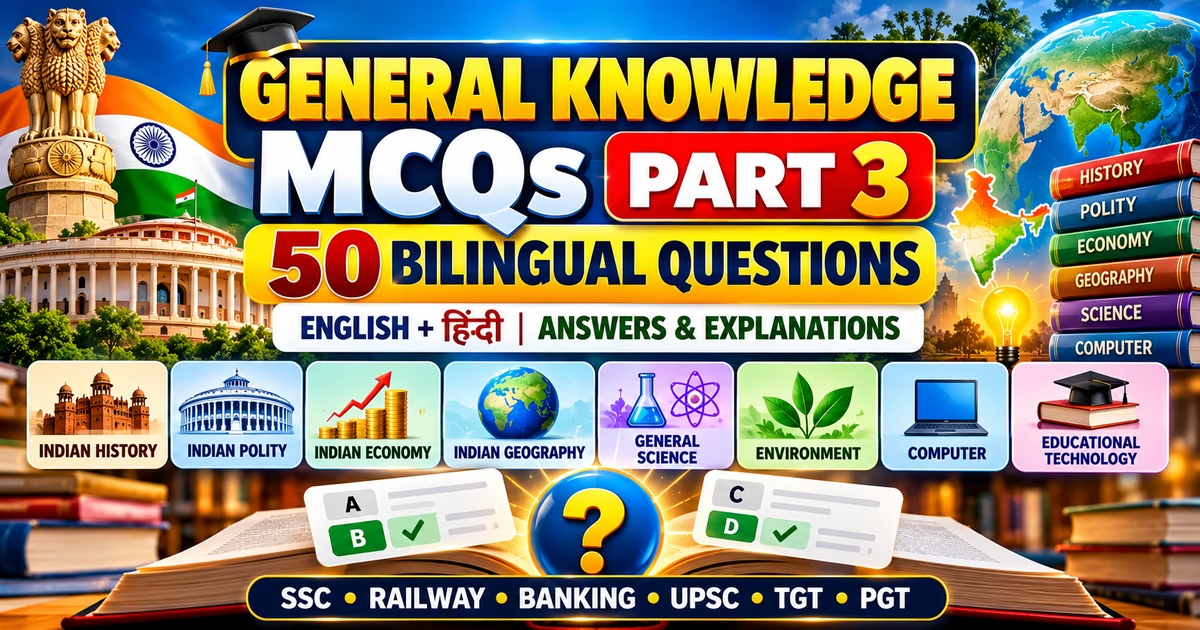
GENERAL KNOWLEDGE PRACTICE SERIES • PART 3
General Knowledge MCQs – Part 3: 50 Bilingual GK Questions with Answers
General Knowledge MCQs Part 3 में आपका स्वागत है। इस practice set में भारतीय इतिहास, संविधान, अर्थव्यवस्था, भूगोल, विज्ञान, पर्यावरण, कंप्यूटर और शिक्षा से जुड़े 50 नए प्रश्न दिए गए हैं। हर प्रश्न के साथ चार विकल्प, सही उत्तर और समझने योग्य explanation दी गई है।
This bilingual practice set is designed for learners preparing for SSC, Railway/RRB, Banking, UPSC, State PSC, Police, Defence, TET/CTET, TGT, PGT and other competitive examinations.
हर question, option, answer और explanation English तथा Hindi में है, जिससे दोनों माध्यमों के विद्यार्थी concepts को समझकर revision कर सकें।
50New MCQs / नए प्रश्न
English + HindiBilingual Practice / द्विभाषी अभ्यास
6Learning Sections / विषय क्षेत्र
Part 3GK Practice Series
📌 Important Note / महत्वपूर्ण सूचना:
यह 50 प्रश्नों का स्वतंत्र अभ्यास सेट है, किसी परीक्षा का आधिकारिक प्रश्नपत्र नहीं। प्रश्नों को Part 1 और Part 2 से अलग रखने का प्रयास किया गया है। परीक्षा की तैयारी के लिए संबंधित परीक्षा प्राधिकरण का नवीनतम official syllabus और notification भी देखें।
📚 What You Will Learn / इस Part में क्या पढ़ेंगे?
इस set में इतिहास, भारतीय संविधान, आर्थिक संस्थाएँ, भौगोलिक विशेषताएँ, विज्ञान, पर्यावरण संरक्षण, डिजिटल सुरक्षा और शिक्षा से जुड़े प्रश्न शामिल हैं। Explanations में केवल सही विकल्प नहीं, बल्कि उससे जुड़ा मुख्य concept भी बताया गया है।
Use these questions for regular revision, concept checking and bilingual terminology practice. इन प्रश्नों का उपयोग नियमित अभ्यास, concepts की जाँच और English-Hindi terminology के revision के लिए करें।
Sections: History (Q1–8), Polity (Q9–16), Economy (Q17–24), Geography (Q25–32), Science & Environment (Q33–42), Computer & Education (Q43–50).
🏛️ Section 1: Indian History GK / भारतीय इतिहास
इन प्रश्नों में आधुनिक भारत, सामाजिक सुधार और राष्ट्रीय आंदोलन के कुछ महत्वपूर्ण पड़ाव शामिल हैं। Dates और movements को उनके historical context के साथ याद करें।
Q1. Who founded the Brahmo Samaj in 1828?1828 में ब्रह्म समाज की स्थापना किसने की थी?
A. Swami Dayanand Saraswati / स्वामी दयानंद सरस्वती
B. Raja Ram Mohan Roy / राजा राममोहन राय
C. Swami Vivekananda / स्वामी विवेकानंद
D. Ishwar Chandra Vidyasagar / ईश्वरचंद्र विद्यासागर
Answer / उत्तर: B. Raja Ram Mohan Roy / राजा राममोहन राय
Explanation / व्याख्या: Raja Ram Mohan Roy established the Brahmo Sabha in 1828, which became known as the Brahmo Samaj. The movement supported religious and social reform and questioned several prevailing social practices. / राजा राममोहन राय ने 1828 में ब्रह्म सभा की स्थापना की, जो आगे चलकर ब्रह्म समाज के नाम से प्रसिद्ध हुई। इस आंदोलन ने धार्मिक और सामाजिक सुधारों का समर्थन किया तथा अनेक प्रचलित सामाजिक कुरीतियों पर प्रश्न उठाए।
Q2. Who founded the Arya Samaj in 1875?1875 में आर्य समाज की स्थापना किसने की?
A. Swami Dayanand Saraswati / स्वामी दयानंद सरस्वती
B. Raja Ram Mohan Roy / राजा राममोहन राय
C. Ramakrishna Paramahamsa / रामकृष्ण परमहंस
D. Jyotirao Phule / ज्योतिराव फुले
Answer / उत्तर: A. Swami Dayanand Saraswati / स्वामी दयानंद सरस्वती
Explanation / व्याख्या: Swami Dayanand Saraswati founded the Arya Samaj in 1875. The movement emphasized the authority of the Vedas and advocated social and religious reform. Remember the association: Arya Samaj—Dayanand Saraswati. / स्वामी दयानंद सरस्वती ने 1875 में आर्य समाज की स्थापना की। इस आंदोलन ने वेदों के महत्व पर बल दिया और सामाजिक तथा धार्मिक सुधारों का समर्थन किया। याद रखें: आर्य समाज—दयानंद सरस्वती।
Q3. Who is associated with the Aligarh Movement?अलीगढ़ आंदोलन किससे संबंधित है?
A. Sir Syed Ahmad Khan / सर सैयद अहमद खान
B. Bal Gangadhar Tilak / बाल गंगाधर तिलक
C. Gopal Krishna Gokhale / गोपाल कृष्ण गोखले
D. Lala Lajpat Rai / लाला लाजपत राय
Answer / उत्तर: A. Sir Syed Ahmad Khan / सर सैयद अहमद खान
Explanation / व्याख्या: Sir Syed Ahmad Khan promoted modern education among Indian Muslims and became the leading figure associated with the Aligarh Movement. The educational institution he helped establish at Aligarh later developed into Aligarh Muslim University. / सर सैयद अहमद खान ने भारतीय मुसलमानों में आधुनिक शिक्षा को प्रोत्साहित किया और अलीगढ़ आंदोलन के प्रमुख नेता बने। अलीगढ़ में उनके प्रयासों से स्थापित शैक्षिक संस्था आगे चलकर अलीगढ़ मुस्लिम विश्वविद्यालय के रूप में विकसित हुई।
Q4. The Vernacular Press Act was passed in which year?वर्नाक्युलर प्रेस एक्ट किस वर्ष पारित किया गया था?
A. 1857 / 1857
B. 1878 / 1878
C. 1885 / 1885
D. 1905 / 1905
Answer / उत्तर: B. 1878 / 1878
Explanation / व्याख्या: The Vernacular Press Act was enacted in 1878 during Lord Lytton’s viceroyalty. It was intended to restrict publications in Indian-language newspapers that the colonial government considered objectionable. The year and the association with Lord Lytton are useful exam facts. / वर्नाक्युलर प्रेस एक्ट 1878 में लॉर्ड लिटन के वायसराय काल में लागू किया गया था। इसका उद्देश्य भारतीय भाषाओं के उन समाचारपत्रों पर नियंत्रण लगाना था जिन्हें औपनिवेशिक सरकार आपत्तिजनक मानती थी। परीक्षा के लिए वर्ष और लॉर्ड लिटन का संबंध याद रखना उपयोगी है।
Q5. The Jallianwala Bagh massacre took place in which city?जलियाँवाला बाग हत्याकांड किस शहर में हुआ था?
A. Lahore / लाहौर
B. Amritsar / अमृतसर
C. Delhi / दिल्ली
D. Kanpur / कानपुर
Answer / उत्तर: B. Amritsar / अमृतसर
Explanation / व्याख्या: The massacre occurred at Jallianwala Bagh in Amritsar on 13 April 1919, when troops under Brigadier-General Reginald Dyer fired on a gathering. It became a major turning point in public opinion against British colonial rule. / यह हत्याकांड 13 अप्रैल 1919 को अमृतसर के जलियाँवाला बाग में हुआ, जब ब्रिगेडियर-जनरल रेजिनाल्ड डायर के आदेश पर एकत्रित लोगों पर गोली चलाई गई। इस घटना ने ब्रिटिश शासन के विरुद्ध जनमत को गहराई से प्रभावित किया।
Q6. The Simon Commission arrived in India in which year?साइमन कमीशन भारत किस वर्ष आया था?
A. 1919 / 1919
B. 1922 / 1922
C. 1928 / 1928
D. 1935 / 1935
Answer / उत्तर: C. 1928 / 1928
Explanation / व्याख्या: The Simon Commission arrived in India in 1928 to review constitutional reforms. Its members were all British, with no Indian member, leading to widespread protests and the slogan “Simon Go Back.” / साइमन कमीशन 1928 में संवैधानिक सुधारों की समीक्षा के लिए भारत आया। इसमें कोई भारतीय सदस्य नहीं था, इसलिए व्यापक विरोध हुआ और “Simon Go Back” का नारा प्रसिद्ध हुआ।
Q7. Who presided over the Lahore session of the Indian National Congress in 1929?1929 में भारतीय राष्ट्रीय कांग्रेस के लाहौर अधिवेशन की अध्यक्षता किसने की?
A. Mahatma Gandhi / महात्मा गांधी
B. Jawaharlal Nehru / जवाहरलाल नेहरू
C. Subhas Chandra Bose / सुभाष चंद्र बोस
D. Sardar Vallabhbhai Patel / सरदार वल्लभभाई पटेल
Answer / उत्तर: B. Jawaharlal Nehru / जवाहरलाल नेहरू
Explanation / व्याख्या: Jawaharlal Nehru presided over the Lahore session in December 1929. The session adopted the goal of Purna Swaraj, or complete independence, and 26 January 1930 was observed as Independence Day. / जवाहरलाल नेहरू ने दिसंबर 1929 के लाहौर अधिवेशन की अध्यक्षता की। इस अधिवेशन में पूर्ण स्वराज का लक्ष्य अपनाया गया और 26 जनवरी 1930 को स्वतंत्रता दिवस के रूप में मनाया गया।
Q8. The Poona Pact of 1932 was signed between Mahatma Gandhi and whom?1932 का पूना समझौता महात्मा गांधी और किसके बीच हुआ था?
A. Jawaharlal Nehru / जवाहरलाल नेहरू
B. Dr. B. R. Ambedkar / डॉ. बी. आर. आंबेडकर
C. Muhammad Ali Jinnah / मुहम्मद अली जिन्ना
D. Lord Curzon / लॉर्ड कर्जन
Answer / उत्तर: B. Dr. B. R. Ambedkar / डॉ. बी. आर. आंबेडकर
Explanation / व्याख्या: The Poona Pact was concluded in 1932 between Mahatma Gandhi and Dr. B. R. Ambedkar, addressing political representation for the Depressed Classes under the arrangements of that period. It replaced the proposal for separate electorates with reserved seats in joint electorates. / पूना समझौता 1932 में महात्मा गांधी और डॉ. बी. आर. आंबेडकर के बीच हुआ। इसमें उस समय दलित वर्गों के राजनीतिक प्रतिनिधित्व के प्रश्न पर सहमति बनी। अलग निर्वाचन मंडलों के प्रस्ताव के स्थान पर संयुक्त निर्वाचन व्यवस्था में आरक्षित सीटों का प्रावधान किया गया।
⚖️ Section 2: Indian Polity & Constitution / भारतीय राजव्यवस्था एवं संविधान
संविधान के अनुच्छेद, संस्थाएँ और अनुसूचियाँ परीक्षाओं में महत्वपूर्ण होते हैं। उत्तर के साथ संबंधित संवैधानिक प्रावधान को भी याद करें।
Q9. Which Article of the Indian Constitution abolishes untouchability?भारतीय संविधान का कौन-सा अनुच्छेद अस्पृश्यता को समाप्त करता है?
A. Article 14 / अनुच्छेद 14
B. Article 17 / अनुच्छेद 17
C. Article 19 / अनुच्छेद 19
D. Article 25 / अनुच्छेद 25
Answer / उत्तर: B. Article 17 / अनुच्छेद 17
Explanation / व्याख्या: Article 17 abolishes untouchability and forbids its practice in any form. It is part of the Right to Equality under Part III of the Constitution. This is different from Article 14, which concerns equality before law and equal protection of laws. / अनुच्छेद 17 अस्पृश्यता को समाप्त करता है और किसी भी रूप में इसके आचरण को निषिद्ध करता है। यह संविधान के भाग III में समानता के अधिकार के अंतर्गत आता है। यह अनुच्छेद 14 से अलग है, जो विधि के समक्ष समानता से संबंधित है।
Q10. Which Article provides the Right to Education for children aged 6 to 14 years?6 से 14 वर्ष के बच्चों के लिए शिक्षा का अधिकार किस अनुच्छेद में है?
A. Article 19 / अनुच्छेद 19
B. Article 21A / अनुच्छेद 21A
C. Article 24 / अनुच्छेद 24
D. Article 32 / अनुच्छेद 32
Answer / उत्तर: B. Article 21A / अनुच्छेद 21A
Explanation / व्याख्या: Article 21A provides for free and compulsory education for children aged six to fourteen years, in the manner determined by law. It was inserted by the 86th Constitutional Amendment Act, 2002. / अनुच्छेद 21A छह से चौदह वर्ष की आयु के बच्चों के लिए कानून द्वारा निर्धारित तरीके से निःशुल्क और अनिवार्य शिक्षा का प्रावधान करता है। इसे 86वें संविधान संशोधन अधिनियम, 2002 द्वारा जोड़ा गया था।
Q11. Which Schedule of the Constitution contains the list of officially recognized languages?संविधान की किस अनुसूची में मान्यता प्राप्त भाषाओं की सूची दी गई है?
A. Fifth Schedule / पाँचवीं अनुसूची
B. Sixth Schedule / छठी अनुसूची
C. Eighth Schedule / आठवीं अनुसूची
D. Tenth Schedule / दसवीं अनुसूची
Answer / उत्तर: C. Eighth Schedule / आठवीं अनुसूची
Explanation / व्याख्या: The Eighth Schedule lists the languages recognized for constitutional purposes; it currently contains 22 languages. Do not confuse it with the Tenth Schedule, which deals with disqualification on grounds of defection. / आठवीं अनुसूची में संवैधानिक उद्देश्यों के लिए मान्यता प्राप्त भाषाएँ सूचीबद्ध हैं; वर्तमान में इसमें 22 भाषाएँ हैं। इसे दसवीं अनुसूची से न मिलाएँ, जो दल-बदल के आधार पर अयोग्यता से संबंधित है।
Q12. Which Schedule deals with disqualification of legislators on grounds of defection?दल-बदल के आधार पर विधायकों की अयोग्यता किस अनुसूची में दी गई है?
A. Seventh Schedule / सातवीं अनुसूची
B. Eighth Schedule / आठवीं अनुसूची
C. Ninth Schedule / नौवीं अनुसूची
D. Tenth Schedule / दसवीं अनुसूची
Answer / उत्तर: D. Tenth Schedule / दसवीं अनुसूची
Explanation / व्याख्या: The Tenth Schedule contains the anti-defection provisions. It was added by the 52nd Constitutional Amendment Act, 1985 to address defections by members of Parliament and State Legislatures. / दसवीं अनुसूची में दल-बदल विरोधी प्रावधान हैं। इसे 52वें संविधान संशोधन अधिनियम, 1985 द्वारा संसद और राज्य विधानमंडलों के सदस्यों के दल-बदल से संबंधित मामलों के लिए जोड़ा गया था।
Q13. Who appoints the Governor of an Indian State?भारतीय राज्य के राज्यपाल की नियुक्ति कौन करता है?
A. Chief Minister / मुख्यमंत्री
B. President of India / भारत के राष्ट्रपति
C. Chief Justice of India / भारत के मुख्य न्यायाधीश
D. Speaker of the Assembly / विधानसभा अध्यक्ष
Answer / उत्तर: B. President of India / भारत के राष्ट्रपति
Explanation / व्याख्या: Under Article 155, the Governor of a State is appointed by the President by warrant under the President’s hand and seal. The Governor is the constitutional head of the State, while the Council of Ministers headed by the Chief Minister normally exercises executive functions. / अनुच्छेद 155 के अनुसार राज्यपाल की नियुक्ति राष्ट्रपति अपने हस्ताक्षर और मुहर सहित अधिपत्र द्वारा करते हैं। राज्यपाल राज्य के संवैधानिक प्रमुख होते हैं, जबकि सामान्यतः मुख्यमंत्री के नेतृत्व वाली मंत्रिपरिषद कार्यपालिका के कार्य करती है।
Q14. What is the normal term of the Lok Sabha, unless dissolved earlier?पहले भंग न होने की स्थिति में लोकसभा का सामान्य कार्यकाल कितना होता है?
A. Four years / चार वर्ष
B. Five years / पाँच वर्ष
C. Six years / छह वर्ष
D. Seven years / सात वर्ष
Answer / उत्तर: B. Five years / पाँच वर्ष
Explanation / व्याख्या: Article 83(2) provides a five-year term for the House of the People from the date appointed for its first meeting, unless dissolved sooner. This is the normal term; constitutional provisions allow different arrangements during a Proclamation of Emergency. / अनुच्छेद 83(2) के अनुसार लोकसभा का सामान्य कार्यकाल उसकी पहली बैठक के लिए निर्धारित तिथि से पाँच वर्ष है, जब तक उसे पहले भंग न कर दिया जाए। आपातकाल की उद्घोषणा के दौरान संवैधानिक प्रावधानों के अनुसार अलग व्यवस्था संभव है।
Q15. Which Article deals with the establishment and constitution of the Supreme Court of India?भारत के सर्वोच्च न्यायालय की स्थापना और गठन किस अनुच्छेद में है?
A. Article 124 / अनुच्छेद 124
B. Article 148 / अनुच्छेद 148
C. Article 280 / अनुच्छेद 280
D. Article 324 / अनुच्छेद 324
Answer / उत्तर: A. Article 124 / अनुच्छेद 124
Explanation / व्याख्या: Article 124 provides for the establishment and constitution of the Supreme Court of India. Article 148 concerns the Comptroller and Auditor General, Article 280 concerns the Finance Commission, and Article 324 concerns the Election Commission. / अनुच्छेद 124 भारत के सर्वोच्च न्यायालय की स्थापना और गठन से संबंधित है। अनुच्छेद 148 नियंत्रक एवं महालेखा परीक्षक, अनुच्छेद 280 वित्त आयोग और अनुच्छेद 324 निर्वाचन आयोग से संबंधित है।
Q16. Which constitutional body recommends the distribution of certain tax revenues between the Union and the States?केंद्र और राज्यों के बीच कुछ कर-राजस्व के वितरण की सिफारिश कौन-सा संवैधानिक निकाय करता है?
A. Election Commission / निर्वाचन आयोग
B. Finance Commission / वित्त आयोग
C. UPSC / संघ लोक सेवा आयोग
D. NITI Aayog / नीति आयोग
Answer / उत्तर: B. Finance Commission / वित्त आयोग
Explanation / व्याख्या: The Finance Commission, provided under Article 280, recommends the distribution of specified tax revenues between the Union and States and principles governing grants-in-aid. Its recommendations support fiscal relations within India’s federal system. / अनुच्छेद 280 के अंतर्गत वित्त आयोग केंद्र और राज्यों के बीच निर्दिष्ट कर-राजस्व के वितरण तथा अनुदान-सहायता के सिद्धांतों पर सिफारिश करता है। इसकी सिफारिशें भारत की संघीय वित्तीय व्यवस्था में महत्वपूर्ण भूमिका निभाती हैं।
💰 Section 3: Indian Economy GK / भारतीय अर्थव्यवस्था
इन प्रश्नों में वित्तीय समावेशन, कर व्यवस्था, कृषि और आर्थिक मापदंडों के बुनियादी concepts शामिल हैं। Definitions को समझकर याद करें, केवल शब्दों को रटें नहीं।
Q17. NABARD was established in which year?नाबार्ड की स्थापना किस वर्ष हुई थी?
A. 1969 / 1969
B. 1975 / 1975
C. 1982 / 1982
D. 1991 / 1991
Answer / उत्तर: C. 1982 / 1982
Explanation / व्याख्या: The National Bank for Agriculture and Rural Development (NABARD) was established on 12 July 1982. It is an apex development financial institution focused on agriculture and rural development. Remember its role as well as the year: NABARD—agriculture and rural development—1982. / राष्ट्रीय कृषि और ग्रामीण विकास बैंक (नाबार्ड) की स्थापना 12 जुलाई 1982 को हुई थी। यह कृषि और ग्रामीण विकास पर केंद्रित प्रमुख विकास वित्तीय संस्था है। वर्ष के साथ इसका कार्य भी याद रखें: नाबार्ड—कृषि एवं ग्रामीण विकास—1982।
Q18. Which tax is generally classified as a direct tax in India?भारत में सामान्यतः किस कर को प्रत्यक्ष कर माना जाता है?
A. Personal Income Tax / व्यक्तिगत आयकर
B. GST / जीएसटी
C. Customs Duty / सीमा शुल्क
D. Excise Duty / उत्पाद शुल्क
Answer / उत्तर: A. Personal Income Tax / व्यक्तिगत आयकर
Explanation / व्याख्या: A direct tax is imposed directly on the income or wealth of the person or entity liable to pay it. Personal income tax is a common example. Indirect taxes such as GST are collected through transactions and may be passed on in prices. / प्रत्यक्ष कर व्यक्ति या संस्था की आय अथवा संपत्ति पर सीधे लगाया जाता है। व्यक्तिगत आयकर इसका सामान्य उदाहरण है। GST जैसे अप्रत्यक्ष कर लेन-देन के माध्यम से वसूले जाते हैं और उनका भार कीमतों के जरिए आगे منتقل हो सकता है।
Q19. What is meant by per capita income?प्रति व्यक्ति आय का क्या अर्थ है?
A. Total income divided by population / कुल आय को जनसंख्या से विभाजित करना
B. Total exports divided by imports / कुल निर्यात को आयात से विभाजित करना
C. Government tax revenue only / केवल सरकारी कर राजस्व
D. Total bank deposits / कुल बैंक जमा
Answer / उत्तर: A. Total income divided by population / कुल आय को जनसंख्या से विभाजित करना
Explanation / व्याख्या: Per capita income is an average obtained by dividing a specified measure of total income by the population. It can help compare average income across places or periods, but it does not show how income is distributed among individuals. / प्रति व्यक्ति आय कुल आय के किसी निर्दिष्ट माप को जनसंख्या से विभाजित करके निकाला गया औसत है। इससे अलग-अलग स्थानों या समय की औसत आय की तुलना की जा सकती है, लेकिन इससे यह पता नहीं चलता कि आय लोगों के बीच किस तरह वितरित है।
Q20. Which programme is commonly associated with the public distribution of food grains in India?भारत में खाद्यान्नों के सार्वजनिक वितरण से सामान्यतः कौन-सी व्यवस्था संबंधित है?
A. Public Distribution System (PDS) / सार्वजनिक वितरण प्रणाली
B. Securities Exchange System / प्रतिभूति विनिमय प्रणाली
C. Foreign Exchange Market / विदेशी मुद्रा बाजार
D. Open Market Operations / खुले बाजार की कार्रवाई
Answer / उत्तर: A. Public Distribution System (PDS) / सार्वजनिक वितरण प्रणाली
Explanation / व्याख्या: The Public Distribution System distributes specified essential commodities, especially food grains, through designated channels and fair price shops under applicable rules. It is associated with food security and access to essential supplies. / सार्वजनिक वितरण प्रणाली लागू नियमों के अंतर्गत निर्धारित माध्यमों और उचित मूल्य की दुकानों से आवश्यक वस्तुएँ, विशेषकर खाद्यान्न, वितरित करती है। इसका संबंध खाद्य सुरक्षा और आवश्यक वस्तुओं तक पहुँच से है।
Q21. Which crop is most closely associated with India’s Green Revolution in its early phase?भारत में हरित क्रांति के शुरुआती चरण में किस फसल का विशेष संबंध था?
A. Wheat / गेहूँ
B. Tea / चाय
C. Jute / जूट
D. Coffee / कॉफी
Answer / उत्तर: A. Wheat / गेहूँ
Explanation / व्याख्या: The early Green Revolution in India is especially associated with increased wheat production through high-yielding varieties, irrigation, fertilizers and improved farming practices. Rice production also benefited in later and regional developments. / भारत में हरित क्रांति का शुरुआती चरण विशेष रूप से उन्नत किस्मों, सिंचाई, उर्वरकों और बेहतर कृषि पद्धतियों के माध्यम से गेहूँ उत्पादन में वृद्धि से जुड़ा है। बाद के वर्षों में और अलग-अलग क्षेत्रों में धान उत्पादन को भी लाभ हुआ।
Q22. Which institution primarily provides refinance and development support for agriculture and rural development?कृषि और ग्रामीण विकास के लिए पुनर्वित्त तथा विकास सहायता मुख्यतः कौन-सी संस्था देती है?
A. NABARD / नाबार्ड
B. SEBI / सेबी
C. Election Commission / निर्वाचन आयोग
D. UGC / विश्वविद्यालय अनुदान आयोग
Answer / उत्तर: A. NABARD / नाबार्ड
Explanation / व्याख्या: NABARD supports agriculture and rural development through refinance, development initiatives and institutional support. It works with rural financial institutions and other stakeholders; it is not the securities-market regulator or an election authority. / नाबार्ड पुनर्वित्त, विकास पहलों और संस्थागत सहायता के माध्यम से कृषि तथा ग्रामीण विकास का समर्थन करता है। यह ग्रामीण वित्तीय संस्थाओं और अन्य संबंधित पक्षों के साथ काम करता है; यह प्रतिभूति बाजार का नियामक या निर्वाचन प्राधिकरण नहीं है।
Q23. Which organization compiles official national accounts estimates, including GDP, in India?भारत में GDP सहित आधिकारिक राष्ट्रीय लेखा अनुमान कौन-सा संगठन तैयार करता है?
A. National Statistical Office (NSO) / राष्ट्रीय सांख्यिकी कार्यालय
B. Election Commission of India / भारत निर्वाचन आयोग
C. Supreme Court of India / भारत का सर्वोच्च न्यायालय
D. University Grants Commission / विश्वविद्यालय अनुदान आयोग
Answer / उत्तर: A. National Statistical Office (NSO) / राष्ट्रीय सांख्यिकी कार्यालय
Explanation / व्याख्या: The National Statistical Office, under the Ministry of Statistics and Programme Implementation, is responsible for compiling major official statistical estimates, including national accounts. GDP is an important measure of economic activity, and its estimates are published using defined statistical methods. / सांख्यिकी और कार्यक्रम कार्यान्वयन मंत्रालय के अंतर्गत राष्ट्रीय सांख्यिकी कार्यालय प्रमुख आधिकारिक सांख्यिकीय अनुमानों, जिनमें राष्ट्रीय लेखा शामिल है, को तैयार करता है। GDP आर्थिक गतिविधियों का महत्वपूर्ण माप है और इसके अनुमान निर्धारित सांख्यिकीय पद्धतियों से प्रकाशित किए जाते हैं।
Q24. What is a balance of trade?व्यापार संतुलन (Balance of Trade) क्या है?
A. Difference between the value of goods exports and goods imports / वस्तुओं के निर्यात और आयात के मूल्य का अंतर
B. Difference between population and area / जनसंख्या और क्षेत्रफल का अंतर
C. Total government expenditure / कुल सरकारी व्यय
D. Total bank credit / कुल बैंक ऋण
Answer / उत्तर: A. Difference between the value of goods exports and goods imports / वस्तुओं के निर्यात और आयात के मूल्य का अंतर
Explanation / व्याख्या: Balance of trade compares the value of goods exported with the value of goods imported over a period. Exports greater than imports produce a trade surplus; imports greater than exports produce a trade deficit. It is narrower than the current account, which also includes services and other income and transfer flows. / व्यापार संतुलन किसी अवधि में वस्तुओं के निर्यात और आयात के मूल्य की तुलना करता है। निर्यात अधिक होने पर व्यापार अधिशेष और आयात अधिक होने पर व्यापार घाटा होता है। यह चालू खाते से संकीर्ण अवधारणा है, क्योंकि चालू खाते में सेवाएँ, आय और हस्तांतरण भी शामिल होते हैं।
🌍 Section 4: Indian Geography GK / भारतीय भूगोल
भूगोल के प्रश्नों में नदी की दिशा, तट, जलवायु और भौगोलिक विशेषताओं को map-based revision के साथ पढ़ना लाभदायक होता है।
Q25. Which major Indian river flows westward and drains into the Arabian Sea?भारत की कौन-सी प्रमुख नदी पश्चिम की ओर बहकर अरब सागर में गिरती है?
A. Narmada / नर्मदा
B. Godavari / गोदावरी
C. Mahanadi / महानदी
D. Krishna / कृष्णा
Answer / उत्तर: A. Narmada / नर्मदा
Explanation / व्याख्या: The Narmada flows westward through a rift valley between the Vindhya and Satpura ranges and drains into the Arabian Sea. Many major peninsular rivers flow eastward into the Bay of Bengal, making the Narmada’s westward course a useful contrast to remember. / नर्मदा विंध्य और सतपुड़ा पर्वतमालाओं के बीच भ्रंश घाटी से पश्चिम की ओर बहती है और अरब सागर में गिरती है। प्रायद्वीपीय भारत की कई प्रमुख नदियाँ पूर्व की ओर बंगाल की खाड़ी में गिरती हैं, इसलिए नर्मदा की पश्चिममुखी धारा एक महत्वपूर्ण अंतर है।
Q26. The Brahmaputra is known by which name in Tibet?तिब्बत में ब्रह्मपुत्र नदी किस नाम से जानी जाती है?
A. Tsangpo / त्सांगपो
B. Padma / पद्मा
C. Meghna / मेघना
D. Bhagirathi / भागीरथी
Answer / उत्तर: A. Tsangpo / त्सांगपो
Explanation / व्याख्या: In Tibet, the river is commonly called the Yarlung Tsangpo. After entering India through the eastern Himalayas, it is known as the Brahmaputra in the Assam region. River names can change across countries and stretches of the same river system. / तिब्बत में इस नदी को सामान्यतः यारलुंग त्सांगपो कहा जाता है। पूर्वी हिमालय से भारत में प्रवेश करने के बाद असम क्षेत्र में इसे ब्रह्मपुत्र कहा जाता है। एक ही नदी प्रणाली के अलग-अलग देशों और भागों में नाम बदल सकते हैं।
Q27. Which Indian state is strongly associated with the Coromandel Coast?भारत का कौन-सा राज्य कोरोमंडल तट से प्रमुख रूप से संबंधित है?
A. Tamil Nadu / तमिलनाडु
B. Gujarat / गुजरात
C. Goa / गोवा
D. Maharashtra / महाराष्ट्र
Answer / उत्तर: A. Tamil Nadu / तमिलनाडु
Explanation / व्याख्या: The Coromandel Coast lies along the southeastern coast of India, especially associated with Tamil Nadu and adjoining coastal areas. It borders the Bay of Bengal and receives important rainfall from the northeast monsoon. / कोरोमंडल तट भारत के दक्षिण-पूर्वी तट पर स्थित है और मुख्यतः तमिलनाडु तथा आसपास के तटीय क्षेत्रों से संबंधित है। यह बंगाल की खाड़ी के किनारे है और उत्तर-पूर्व मानसून से महत्वपूर्ण वर्षा प्राप्त करता है।
Q28. Which is the largest hot desert in India?भारत का सबसे बड़ा गर्म मरुस्थल कौन-सा है?
A. Sahara / सहारा
B. Thar Desert / थार मरुस्थल
C. Gobi Desert / गोबी मरुस्थल
D. Kalahari Desert / कालाहारी मरुस्थल
Answer / उत्तर: B. Thar Desert / थार मरुस्थल
Explanation / व्याख्या: The Thar Desert, also called the Great Indian Desert, occupies much of western Rajasthan and extends into neighbouring areas. Sahara, Gobi and Kalahari are deserts outside India, so they are distractors rather than possible Indian answers. / थार मरुस्थल, जिसे महान भारतीय मरुस्थल भी कहा जाता है, पश्चिमी राजस्थान के बड़े भाग में फैला है और पड़ोसी क्षेत्रों तक विस्तृत है। सहारा, गोबी और कालाहारी भारत के बाहर स्थित मरुस्थल हैं।
Q29. Which latitude divides the Earth into the Northern and Southern Hemispheres?कौन-सा अक्षांश पृथ्वी को उत्तरी और दक्षिणी गोलार्ध में बाँटता है?
A. Tropic of Cancer / कर्क रेखा
B. Equator / भूमध्य रेखा
C. Arctic Circle / आर्कटिक वृत्त
D. Tropic of Capricorn / मकर रेखा
Answer / उत्तर: B. Equator / भूमध्य रेखा
Explanation / व्याख्या: The Equator is the 0° latitude line and divides Earth into the Northern and Southern Hemispheres. The Tropics lie north and south of it, while the Arctic Circle is in the Northern Hemisphere. / भूमध्य रेखा 0° अक्षांश पर स्थित है और पृथ्वी को उत्तरी तथा दक्षिणी गोलार्ध में बाँटती है। कर्क और मकर रेखाएँ इसके उत्तर और दक्षिण में हैं, जबकि आर्कटिक वृत्त उत्तरी गोलार्ध में स्थित है।
Q30. Which type of rainfall is commonly caused when moist air rises over a mountain barrier?नम वायु के पर्वतीय अवरोध के ऊपर उठने से सामान्यतः किस प्रकार की वर्षा होती है?
A. Orographic rainfall / पर्वतीय वर्षा
B. Convectional rainfall / संवहनीय वर्षा
C. Artificial rainfall only / केवल कृत्रिम वर्षा
D. Frontal rainfall only / केवल वाताग्र वर्षा
Answer / उत्तर: A. Orographic rainfall / पर्वतीय वर्षा
Explanation / व्याख्या: When moist air is forced to rise over a mountain, it cools; water vapour may condense and produce rain on the windward side. This is called orographic or relief rainfall. The Western Ghats provide a familiar Indian example of this process. / जब नम वायु को पर्वत के ऊपर उठने के लिए बाध्य किया जाता है, तो वह ठंडी होती है; जलवाष्प संघनित होकर पवनाभिमुख ढाल पर वर्षा कर सकती है। इसे पर्वतीय या स्थलाकृतिक वर्षा कहते हैं। पश्चिमी घाट इसका भारत में जाना-पहचाना उदाहरण है।
Q31. Which line of latitude passes through the middle of Africa and South America?कौन-सी अक्षांश रेखा अफ्रीका और दक्षिण अमेरिका के मध्य भाग से गुजरती है?
A. Equator / भूमध्य रेखा
B. Arctic Circle / आर्कटिक वृत्त
C. Tropic of Capricorn only / केवल मकर रेखा
D. Antarctic Circle / अंटार्कटिक वृत्त
Answer / उत्तर: A. Equator / भूमध्य रेखा
Explanation / व्याख्या: The Equator crosses both Africa and South America. It also passes through parts of Asia, including Indonesia. A globe or world map helps distinguish this line from the Tropics, which lie farther north or south. / भूमध्य रेखा अफ्रीका और दक्षिण अमेरिका दोनों से गुजरती है। यह इंडोनेशिया सहित एशिया के कुछ भागों से भी गुजरती है। ग्लोब या विश्व मानचित्र से इसे कर्क और मकर रेखाओं से अलग पहचानना आसान होता है।
Q32. Which instrument is used to measure atmospheric pressure?वायुमंडलीय दाब मापने के लिए किस यंत्र का उपयोग किया जाता है?
A. Barometer / बैरोमीटर
B. Hygrometer / हाइग्रोमीटर
C. Anemometer / एनीमोमीटर
D. Rain gauge / वर्षामापी
Answer / उत्तर: A. Barometer / बैरोमीटर
Explanation / व्याख्या: A barometer measures atmospheric pressure. A hygrometer measures humidity, an anemometer measures wind speed, and a rain gauge measures rainfall. Learning these instruments together is useful because exam questions often test their functions as a group. / बैरोमीटर वायुमंडलीय दाब मापता है। हाइग्रोमीटर आर्द्रता, एनीमोमीटर पवन की गति और वर्षामापी वर्षा मापता है। इन यंत्रों को उनके कार्यों के साथ समूह में याद करना उपयोगी है।
🔬 Section 5: General Science & Environment / सामान्य विज्ञान एवं पर्यावरण
इस भाग में विज्ञान के सिद्धांत, मानव शरीर, ऊर्जा, पर्यावरण और संरक्षण से जुड़े प्रश्न हैं। Explanation में संबंधित scientific principle भी दिया गया है ताकि उत्तर को समझकर याद रखा जा सके।
Q33. What is the SI unit of electric current?विद्युत धारा की SI इकाई क्या है?
A. Volt / वोल्ट
B. Ampere / एम्पियर
C. Ohm / ओम
D. Coulomb / कूलॉम
Answer / उत्तर: B. Ampere / एम्पियर
Explanation / व्याख्या: The ampere (A) is the SI unit of electric current, which describes the rate of flow of electric charge. Volt measures potential difference, ohm measures electrical resistance, and coulomb is a unit of electric charge. These units are related but measure different quantities. / एम्पियर (A) विद्युत धारा की SI इकाई है, जो विद्युत आवेश के प्रवाह की दर बताती है। वोल्ट विभवांतर, ओम विद्युत प्रतिरोध और कूलॉम विद्युत आवेश की इकाई है। ये इकाइयाँ संबंधित हैं, लेकिन अलग-अलग राशियाँ मापती हैं।
Q34. Sound cannot travel through which medium?ध्वनि किस माध्यम से यात्रा नहीं कर सकती?
A. Air / वायु
B. Water / जल
C. Steel / इस्पात
D. Vacuum / निर्वात
Answer / उत्तर: D. Vacuum / निर्वात
Explanation / व्याख्या: Sound is a mechanical wave and requires particles to transfer vibrations from one place to another. A vacuum has no material particles to carry these vibrations, so sound cannot propagate through it. Sound can travel through gases, liquids and solids. / ध्वनि एक यांत्रिक तरंग है और कंपन को आगे पहुँचाने के लिए कणों की आवश्यकता होती है। निर्वात में ऐसे पदार्थ-कण नहीं होते, इसलिए ध्वनि उसमें नहीं चल सकती। ध्वनि गैस, द्रव और ठोस में यात्रा कर सकती है।
Q35. Which part of the human kidney contains the functional units called nephrons?मानव गुर्दे में नेफ्रॉन नामक कार्यात्मक इकाइयाँ किस अंग में पाई जाती हैं?
A. Kidney / गुर्दा
B. Liver / यकृत
C. Pancreas / अग्न्याशय
D. Spleen / प्लीहा
Answer / उत्तर: A. Kidney / गुर्दा
Explanation / व्याख्या: Nephrons are the structural and functional units of the kidneys. They filter blood, help remove waste products and regulate water and electrolyte balance as urine is formed. The liver processes many substances, while the pancreas produces digestive enzymes and hormones. / नेफ्रॉन गुर्दे की संरचनात्मक और कार्यात्मक इकाइयाँ हैं। ये रक्त को छानने, अपशिष्ट पदार्थ हटाने तथा जल और इलेक्ट्रोलाइट संतुलन नियंत्रित करने में सहायता करते हैं। यकृत कई पदार्थों का प्रसंस्करण करता है, जबकि अग्न्याशय पाचक एंजाइम और हार्मोन बनाता है।
Q36. Which vitamin plays an important role in normal blood clotting?सामान्य रक्त का थक्का बनने में कौन-सा विटामिन महत्वपूर्ण भूमिका निभाता है?
A. Vitamin A / विटामिन A
B. Vitamin B12 / विटामिन B12
C. Vitamin K / विटामिन K
D. Vitamin C / विटामिन C
Answer / उत्तर: C. Vitamin K / विटामिन K
Explanation / व्याख्या: Vitamin K is required for the normal functioning of several proteins involved in blood coagulation. Severe deficiency can impair clotting. Remember this separately from vitamin C, which is important for collagen formation and wound healing. / विटामिन K रक्त के थक्के बनने की प्रक्रिया में शामिल कई प्रोटीनों के सामान्य कार्य के लिए आवश्यक है। इसकी गंभीर कमी से रक्त का थक्का बनने की प्रक्रिया प्रभावित हो सकती है। इसे विटामिन C से अलग याद रखें, जो कोलेजन निर्माण और घाव भरने में महत्वपूर्ण है।
Q37. The atomic number of an element is equal to the number of which particles in its nucleus?किसी तत्व की परमाणु संख्या उसके नाभिक में किन कणों की संख्या के बराबर होती है?
A. Neutrons / न्यूट्रॉन
B. Protons / प्रोटॉन
C. Protons plus neutrons / प्रोटॉन और न्यूट्रॉन का योग
D. Electrons plus neutrons / इलेक्ट्रॉन और न्यूट्रॉन का योग
Answer / उत्तर: B. Protons / प्रोटॉन
Explanation / व्याख्या: The atomic number is the number of protons in an atom’s nucleus and identifies the element. In a neutral atom, the number of electrons equals the number of protons, but the atomic number itself is defined by protons, not by neutrons or total nuclear particles. / परमाणु संख्या नाभिक में प्रोटॉनों की संख्या है और इसी से तत्व की पहचान होती है। उदासीन परमाणु में इलेक्ट्रॉनों की संख्या प्रोटॉनों के बराबर होती है, लेकिन परमाणु संख्या की परिभाषा प्रोटॉनों पर आधारित है, न्यूट्रॉनों या कुल नाभिकीय कणों पर नहीं।
Q38. What happens to blue litmus paper when it is placed in an acidic solution?अम्लीय विलयन में नीले लिटमस पत्र का रंग क्या हो जाता है?
A. It turns red / यह लाल हो जाता है
B. It turns green / यह हरा हो जाता है
C. It remains blue in all cases / हर स्थिति में नीला रहता है
D. It turns black / यह काला हो जाता है
Answer / उत्तर: A. It turns red / यह लाल हो जाता है
Explanation / व्याख्या: Acids turn blue litmus red, while bases turn red litmus blue. Litmus is an indicator that helps distinguish acidic and basic solutions; it does not by itself tell the exact pH value. / अम्ल नीले लिटमस को लाल कर देते हैं, जबकि क्षार लाल लिटमस को नीला कर देते हैं। लिटमस अम्लीय और क्षारीय विलयनों में अंतर बताने वाला सूचक है; यह अपने आप सटीक pH मान नहीं बताता।
Q39. Which form of energy is stored in a stretched spring?खींचे गए स्प्रिंग में कौन-सी ऊर्जा संचित होती है?
A. Chemical energy / रासायनिक ऊर्जा
B. Elastic potential energy / प्रत्यास्थ स्थितिज ऊर्जा
C. Nuclear energy / नाभिकीय ऊर्जा
D. Sound energy / ध्वनि ऊर्जा
Answer / उत्तर: B. Elastic potential energy / प्रत्यास्थ स्थितिज ऊर्जा
Explanation / व्याख्या: A spring stores elastic potential energy when it is stretched or compressed within its elastic limit. When released, this stored energy can be converted into kinetic energy and cause motion. The same principle applies to many elastic objects. / स्प्रिंग को उसकी प्रत्यास्थ सीमा के भीतर खींचने या दबाने पर उसमें प्रत्यास्थ स्थितिज ऊर्जा संचित होती है। छोड़ने पर यह ऊर्जा गतिज ऊर्जा में बदलकर गति उत्पन्न कर सकती है। यही सिद्धांत कई प्रत्यास्थ वस्तुओं पर लागू होता है।
Q40. Which gas is essential for aerobic respiration in humans?मनुष्यों में वायवीय श्वसन के लिए कौन-सी गैस आवश्यक है?
A. Oxygen / ऑक्सीजन
B. Helium / हीलियम
C. Neon / निऑन
D. Hydrogen / हाइड्रोजन
Answer / उत्तर: A. Oxygen / ऑक्सीजन
Explanation / व्याख्या: Aerobic cellular respiration uses oxygen to help release energy from nutrients efficiently. Oxygen is transported from the lungs to tissues by the blood. This is different from breathing alone: respiration also refers to the cellular chemical processes that release usable energy. / वायवीय कोशिकीय श्वसन में ऑक्सीजन पोषक पदार्थों से ऊर्जा मुक्त करने में सहायता करती है। रक्त ऑक्सीजन को फेफड़ों से ऊतकों तक पहुँचाता है। यह केवल साँस लेने से अलग है; श्वसन में कोशिकाओं के भीतर ऊर्जा मुक्त करने वाली रासायनिक प्रक्रियाएँ भी शामिल हैं।
Q41. What is the main purpose of a wildlife sanctuary?वन्यजीव अभयारण्य का मुख्य उद्देश्य क्या है?
A. Protect wildlife and their habitats / वन्यजीवों और उनके आवासों की रक्षा
B. Expand urban construction / शहरी निर्माण बढ़ाना
C. Permit unrestricted hunting / बिना प्रतिबंध शिकार की अनुमति
D. Replace all forests with farms / सभी वनों को खेतों में बदलना
Answer / उत्तर: A. Protect wildlife and their habitats / वन्यजीवों और उनके आवासों की रक्षा
Explanation / व्याख्या: Wildlife sanctuaries are protected areas established to conserve wild animals and their habitats. Activities within them are governed by applicable conservation laws and rules. Protection of habitat is important because species need food, shelter and suitable conditions to survive. / वन्यजीव अभयारण्य जंगली जीवों और उनके आवासों के संरक्षण के लिए बनाए गए संरक्षित क्षेत्र हैं। इनमें गतिविधियाँ संबंधित संरक्षण कानूनों और नियमों के अधीन होती हैं। आवास की रक्षा महत्वपूर्ण है, क्योंकि प्रजातियों को जीवित रहने के लिए भोजन, आश्रय और उपयुक्त परिस्थितियों की आवश्यकता होती है।
Q42. Which international agreement is specifically associated with protecting the ozone layer by controlling ozone-depleting substances?ओजोन परत की रक्षा के लिए ओजोन-क्षयकारी पदार्थों को नियंत्रित करने से कौन-सा अंतरराष्ट्रीय समझौता संबंधित है?
A. Montreal Protocol / मॉन्ट्रियल प्रोटोकॉल
B. Ramsar Convention / रामसर कन्वेंशन
C. Convention on Biological Diversity / जैव विविधता अभिसमय
D. Antarctic Treaty only / केवल अंटार्कटिक संधि
Answer / उत्तर: A. Montreal Protocol / मॉन्ट्रियल प्रोटोकॉल
Explanation / व्याख्या: The Montreal Protocol, adopted in 1987, is an international agreement to phase out the production and consumption of substances that deplete the ozone layer. It is a major example of international cooperation on an environmental problem. / 1987 में अपनाया गया मॉन्ट्रियल प्रोटोकॉल ओजोन परत को क्षति पहुँचाने वाले पदार्थों के उत्पादन और उपयोग को चरणबद्ध रूप से समाप्त करने से संबंधित अंतरराष्ट्रीय समझौता है। यह पर्यावरणीय समस्या पर अंतरराष्ट्रीय सहयोग का महत्वपूर्ण उदाहरण है।
💻 Section 6: Computer, Digital Awareness & Education / कंप्यूटर, डिजिटल जागरूकता एवं शिक्षा
इस section में common digital terms, data handling और education-related concepts शामिल हैं। Explanations में संबंधित उपयोग और शब्दों के बीच अंतर को स्पष्ट किया गया है।
Q43. In a spreadsheet, what does a formula generally begin with?स्प्रेडशीट में formula सामान्यतः किस चिह्न से शुरू होता है?
A. Equals sign (=) / बराबर का चिह्न (=)
B. Question mark (?) / प्रश्नवाचक चिह्न (?)
C. At sign (@) in every case / हर स्थिति में @ चिह्न
D. Exclamation mark (!) / विस्मयादिबोधक चिह्न (!)
Answer / उत्तर: A. Equals sign (=) / बराबर का चिह्न (=)
Explanation / व्याख्या: In common spreadsheet applications such as Excel and Google Sheets, a formula usually begins with an equals sign. For example, =A1+B1 adds the values in cells A1 and B1. Functions such as SUM can also be used in formulas. / Excel और Google Sheets जैसे सामान्य spreadsheet applications में formula आम तौर पर बराबर के चिह्न से शुरू होता है। उदाहरण के लिए, =A1+B1 कोशिकाओं A1 और B1 के मान जोड़ता है। SUM जैसे functions भी formulas में उपयोग किए जा सकते हैं।
Q44. What is the primary purpose of a PDF file format?PDF file format का मुख्य उद्देश्य क्या है?
A. Preserve document layout across devices / विभिन्न उपकरणों पर दस्तावेज़ का layout बनाए रखना
B. Increase internet speed / इंटरनेट की गति बढ़ाना
C. Replace every operating system / हर operating system को बदलना
D. Act only as an audio format / केवल audio format के रूप में कार्य करना
Answer / उत्तर: A. Preserve document layout across devices / विभिन्न उपकरणों पर दस्तावेज़ का layout बनाए रखना
Explanation / व्याख्या: PDF stands for Portable Document Format. It is designed to present documents consistently across different devices and software, although the exact appearance may depend on fonts, settings and document features. PDF files can contain text, images, links and other elements. / PDF का पूरा नाम Portable Document Format है। इसे अलग-अलग उपकरणों और सॉफ्टवेयर पर दस्तावेज़ को लगभग समान रूप में दिखाने के लिए बनाया गया है, हालांकि fonts और settings से दृश्य रूप प्रभावित हो सकता है। PDF में text, images, links और अन्य तत्व हो सकते हैं।
Q45. What is cloud storage?क्लाउड स्टोरेज क्या है?
A. Storing data on remote servers accessed over a network / नेटवर्क के माध्यम से उपलब्ध remote servers पर डेटा रखना
B. Storing files only on paper / केवल कागज पर फाइल रखना
C. A type of computer monitor / कंप्यूटर मॉनिटर का एक प्रकार
D. A method of printing documents / दस्तावेज़ छापने की विधि
Answer / उत्तर: A. Storing data on remote servers accessed over a network / नेटवर्क के माध्यम से उपलब्ध remote servers पर डेटा रखना
Explanation / व्याख्या: Cloud storage keeps files on remote servers that users can access through the internet or another network, subject to account permissions and connectivity. It can support synchronization and sharing, but users should still protect accounts, manage permissions and maintain backups for important files. / क्लाउड स्टोरेज में फाइलें दूरस्थ सर्वरों पर रखी जाती हैं, जिन्हें उपयोगकर्ता इंटरनेट या अन्य नेटवर्क से, उचित अनुमति और कनेक्टिविटी होने पर, खोल सकते हैं। इससे synchronization और sharing संभव होती है, लेकिन महत्वपूर्ण फाइलों के लिए account security, permissions और backups का ध्यान रखना चाहिए।
Q46. What does two-factor authentication (2FA) add to account security?Two-factor authentication (2FA) account security में क्या अतिरिक्त सुरक्षा जोड़ता है?
A. A second verification factor / सत्यापन का दूसरा कारक
B. A larger screen / बड़ी स्क्रीन
C. Automatic public access / स्वतः सार्वजनिक access
D. Removal of all passwords in every system / हर system में सभी passwords हटाना
Answer / उत्तर: A. A second verification factor / सत्यापन का दूसरा कारक
Explanation / व्याख्या: Two-factor authentication requires two different types of verification, such as a password plus a code or an approved authentication prompt. It reduces reliance on a password alone, though users must still protect recovery methods and never share authentication codes with untrusted people. / Two-factor authentication में सत्यापन के दो अलग प्रकार आवश्यक होते हैं, जैसे password के साथ code या approved authentication prompt। इससे केवल password पर निर्भरता कम होती है, लेकिन recovery methods सुरक्षित रखना और authentication codes किसी अनजान व्यक्ति से साझा न करना भी आवश्यक है।
Q47. Which of the following is an example of an open-source operating system?निम्नलिखित में से कौन-सा open-source operating system का उदाहरण है?
A. GNU/Linux distributions / GNU/Linux वितरण
B. Microsoft Windows only / केवल Microsoft Windows
C. A spreadsheet file / spreadsheet फाइल
D. A web address / वेब पता
Answer / उत्तर: A. GNU/Linux distributions / GNU/Linux वितरण
Explanation / व्याख्या: GNU/Linux distributions are built around the Linux kernel and related open-source software. Open-source licensing allows users to inspect, modify and redistribute code according to the relevant licence terms. This does not mean every program on a Linux system must be open source. / GNU/Linux distributions, Linux kernel और संबंधित open-source software पर आधारित होते हैं। Open-source licence की शर्तों के अनुसार उपयोगकर्ता code देख, बदल और वितरित कर सकते हैं। इसका अर्थ यह नहीं है कि Linux system का हर program अनिवार्य रूप से open source ही होगा।
Q48. What is the main purpose of a QR code?QR code का मुख्य उपयोग क्या है?
A. Encode information that can be scanned / ऐसी जानकारी encode करना जिसे scan किया जा सके
B. Increase battery capacity / बैटरी की क्षमता बढ़ाना
C. Improve screen resolution / स्क्रीन resolution बढ़ाना
D. Replace every internet protocol / हर internet protocol को बदलना
Answer / उत्तर: A. Encode information that can be scanned / ऐसी जानकारी encode करना जिसे scan किया जा सके
Explanation / व्याख्या: A Quick Response (QR) code is a two-dimensional barcode that can encode information such as a web link or text. A compatible camera or scanner can read it. Users should check unfamiliar links before opening them, because a QR code can also direct to an unsafe website. / Quick Response (QR) code एक द्वि-आयामी barcode है, जिसमें web link या text जैसी जानकारी encode की जा सकती है। compatible camera या scanner इसे पढ़ सकता है। अनजान QR code से खुलने वाले link को खोलने से पहले जाँचें, क्योंकि यह असुरक्षित website पर भी ले जा सकता है।
Q49. Which organization is responsible for accrediting and coordinating universities in India within its statutory framework?भारत में अपने वैधानिक ढाँचे के अंतर्गत विश्वविद्यालयों के समन्वय और मानकों से कौन-सी संस्था संबंधित है?
A. University Grants Commission (UGC) / विश्वविद्यालय अनुदान आयोग
B. Election Commission / निर्वाचन आयोग
C. SEBI / सेबी
D. NABARD / नाबार्ड
Answer / उत्तर: A. University Grants Commission (UGC) / विश्वविद्यालय अनुदान आयोग
Explanation / व्याख्या: The UGC is a statutory body concerned with coordination and maintenance of standards of university education and related functions under the UGC Act. Accreditation is also carried out by designated bodies, such as NAAC, so UGC and NAAC should not be treated as identical organizations. / UGC एक वैधानिक निकाय है, जो UGC Act के अंतर्गत विश्वविद्यालयी शिक्षा के समन्वय और मानकों के रखरखाव सहित संबंधित कार्यों से जुड़ा है। मान्यता/अधिमान्यता का कार्य NAAC जैसी निर्धारित संस्थाएँ भी करती हैं, इसलिए UGC और NAAC को एक ही संस्था नहीं समझना चाहिए।
Q50. What does formative assessment mainly aim to do?रचनात्मक आकलन (Formative Assessment) का मुख्य उद्देश्य क्या है?
A. Support learning through ongoing feedback / निरंतर feedback से सीखने में सहायता करना
B. Only issue the final certificate / केवल अंतिम प्रमाणपत्र जारी करना
C. Replace all classroom teaching / पूरी कक्षा-शिक्षण प्रक्रिया को बदल देना
D. Measure only attendance / केवल उपस्थिति मापना
Answer / उत्तर: A. Support learning through ongoing feedback / निरंतर feedback से सीखने में सहायता करना
Explanation / व्याख्या: Formative assessment takes place during the learning process. Teachers use questioning, short tasks, observation and feedback to identify what learners understand and where they need help. Its primary purpose is to improve learning while there is still time to adjust teaching, rather than only judging performance at the end. / रचनात्मक आकलन सीखने की प्रक्रिया के दौरान किया जाता है। शिक्षक प्रश्नों, छोटे कार्यों, अवलोकन और feedback से समझते हैं कि विद्यार्थी क्या सीख चुके हैं और कहाँ सहायता चाहिए। इसका मुख्य उद्देश्य अंतिम परिणाम देने भर के बजाय समय रहते शिक्षण और सीखने में सुधार करना है।
🔗 Continue the GK MCQs Series / GK सीरीज़ आगे पढ़ें
इस series के सभी parts को क्रम से हल करने पर अलग-अलग विषयों में revision करने में मदद मिलेगी। नीचे दिए गए links संबंधित resources तक पहुँचने के लिए हैं।
🎯 Useful for Competitive Exams / किन परीक्षाओं के लिए उपयोगी?
SSC ExaminationsSSC CGL, CHSL, GD और अन्य SSC परीक्षाओं के General Awareness revision के लिए।
Railway / RRBRailway NTPC, Group D और अन्य RRB परीक्षाओं के सामान्य ज्ञान अभ्यास के लिए।
Banking ExamsIBPS, SBI और अन्य banking examinations के foundational GK revision के लिए।
UPSC & State PSCGeneral Studies के बुनियादी concepts दोहराने के लिए।
Police & DefencePolice, NDA, CDS और अन्य भर्ती परीक्षाओं के सामान्य ज्ञान अभ्यास के लिए।
TET / CTET / TGT / PGTTeacher eligibility और recruitment preparation के सामान्य अध्ययन भाग के revision के लिए।
Note: हर परीक्षा का syllabus और question pattern अलग हो सकता है। इस set को संबंधित official syllabus के साथ उपयोग करें।
🌐 Other Educational & Career Websites / अन्य उपयोगी वेबसाइटें
पढ़ाई, career planning, online tools और अन्य educational resources के लिए हमारे दूसरे platforms भी देखें।
📝 How to Practise These Questions / इन प्रश्नों का अभ्यास कैसे करें?
- Attempt first / पहले हल करें: उत्तर देखने से पहले सभी विकल्पों में से अपना उत्तर चुनें।
- Check the answer / उत्तर जाँचें: अपने उत्तर को सही विकल्प से मिलाएँ।
- Read the explanation / व्याख्या पढ़ें: गलत उत्तर होने पर केवल सही विकल्प याद न करें; उससे जुड़ा concept भी समझें।
- Make a revision list / पुनरावृत्ति सूची बनाएँ: जिन प्रश्नों में गलती हुई, उनके facts और related concepts लिख लें।
- Retest later / दोबारा अभ्यास करें: कुछ दिनों बाद उन्हीं प्रश्नों को उत्तर छिपाकर हल करें।
❓ Frequently Asked Questions / अक्सर पूछे जाने वाले प्रश्न
Q1. Is Part 3 only for TGT and PGT candidates?
Answer / उत्तर: नहीं। यह SSC, Railway/RRB, Banking, UPSC, State PSC, Police, Defence, TET/CTET और अन्य competitive exams के foundational GK revision में भी उपयोगी हो सकता है। वास्तविक परीक्षा की तैयारी के लिए संबंधित official syllabus को प्राथमिकता दें।
Q2. Are all questions and answers bilingual?
Answer / उत्तर: हाँ। प्रश्न, विकल्प, सही उत्तर और explanations English तथा Hindi दोनों में दिए गए हैं।
Q3. Are these questions repeated from Parts 1 and 2?
Answer / उत्तर: इस Part को पहले के दोनों sets से अलग प्रश्नों के साथ तैयार किया गया है। फिर भी किसी भी परीक्षा की तैयारी में समान विषयों के मूल concepts का दोबारा आना सामान्य है।
Q4. Are these official examination questions?
Answer / उत्तर: नहीं। यह practice set है, official question paper नहीं। किसी परीक्षा के वास्तविक प्रश्नों या pattern की पुष्टि के लिए संबंधित परीक्षा प्राधिकरण की आधिकारिक सामग्री देखें।
Q5. Why are detailed explanations included?
Answer / उत्तर: Explanations सही विकल्प का कारण बताते हैं, संबंधित concept समझाते हैं और मिलते-जुलते तथ्यों में अंतर स्पष्ट करते हैं। इससे विद्यार्थी केवल उत्तर याद करने के बजाय concept-based revision कर सकते हैं।
Q6. Will more GK parts be added?
Answer / उत्तर: इस series को आगे नए विषयों और नए प्रश्नों के साथ बढ़ाया जा सकता है। Evergreen GK और time-sensitive Current Affairs को अलग रखना उपयोगी रहेगा।
✅ Quick Revision Checklist / त्वरित पुनरावृत्ति सूची
- Indian Social Reform Movements / भारतीय सामाजिक सुधार आंदोलन
- National Movement and Important Events / राष्ट्रीय आंदोलन और महत्वपूर्ण घटनाएँ
- Constitutional Articles and Schedules / संवैधानिक अनुच्छेद और अनुसूचियाँ
- Government Institutions / सरकारी संस्थाएँ
- Indian Economy and Financial Inclusion / भारतीय अर्थव्यवस्था और वित्तीय समावेशन
- Taxation and Economic Indicators / कर व्यवस्था और आर्थिक संकेतक
- Indian Rivers, Coasts and Climate / भारतीय नदियाँ, तट और जलवायु
- Physics, Chemistry and Biology Basics / भौतिकी, रसायन और जीवविज्ञान की मूल बातें
- Environment and Conservation / पर्यावरण और संरक्षण
- Computer, Cloud Storage and Cyber Safety / कंप्यूटर, क्लाउड स्टोरेज और साइबर सुरक्षा
- Educational Institutions and Assessment / शैक्षिक संस्थाएँ और आकलन
📌 Source & Accuracy Note / स्रोत एवं शुद्धता संबंधी सूचना
इस practice set के प्रश्न सामान्य शैक्षिक ज्ञान और स्थिर तथ्यों पर आधारित हैं। संवैधानिक प्रावधानों के लिए भारत सरकार के Legislative Department के संविधान-संबंधी स्रोत, अर्थव्यवस्था के लिए RBI की आधिकारिक सामग्री और भूगोल के लिए NCERT जैसे शैक्षिक स्रोत उपयोगी संदर्भ हैं।
संदर्भ: Legislative Department, Government of India · Reserve Bank of India · NCERT.
कुछ प्रश्न सामान्यीकृत exam-preparation wording में हैं। परीक्षा-विशिष्ट नियम, वर्तमान संस्थागत जानकारी और बदलते syllabus के लिए संबंधित आधिकारिक स्रोत की नवीनतम जानकारी को प्राथमिकता दें।